
Having run 100’s of Strategy Sims Masterclasses we’ve learned how to best plan and structure a program for maximum value to the participants. One way of increasing the value, is to ensure that you, the facilitator and your team are sufficiently prepared . here are 14 questions you can ask yourself, if you are preparing to run a session – with a focus on digital.
Note, in this article we focus on Scale Up!, but the structure is equally valid for Fund Manager!, Transform! or any of the other Strategy Sims.
Scale Up! fact box Scale Up! comes in multiple editions: – Scale Up! (Global) – Scale Up Angel! – Scale Up X! – Scale Up MENA! – Scale Up Africa Rising! – with more editions due out 2026
1. Who are your participants?
What’s their level? What’s their expectations? How well do you know the participants you will be working with? Make sure you have a deep understanding of your audience, and truly design a program with their level and expectations in mind.
Not sure who you will be meeting? That’s okay; run two webinars in advance to get to know them.
2. What’s your framing?
How do you position this? Short, fun session? Learning opportunity for beginners? Advanced-level “I will teach you…” vs. “I expect you to handle everything we throw at you…”?
Personally, I like to frame Scale Up MENA! with “Can you outperform Careem? $3,2BN exit in 7 years. Can you beat it? Good luck” For Africa Rising!, we use Moove. “Can you outperform Moove? From Africa to the world. From pre-seed to $100M with Uber. Can you top it?” For early-stage founders, maybe the framing is ‘can you avoid bankruptcy’?` Think about the framing, the narrative you want to go for.
3. What’s the core content you want to focus on?
You only have a few hours, truly, what are you going to focus on?
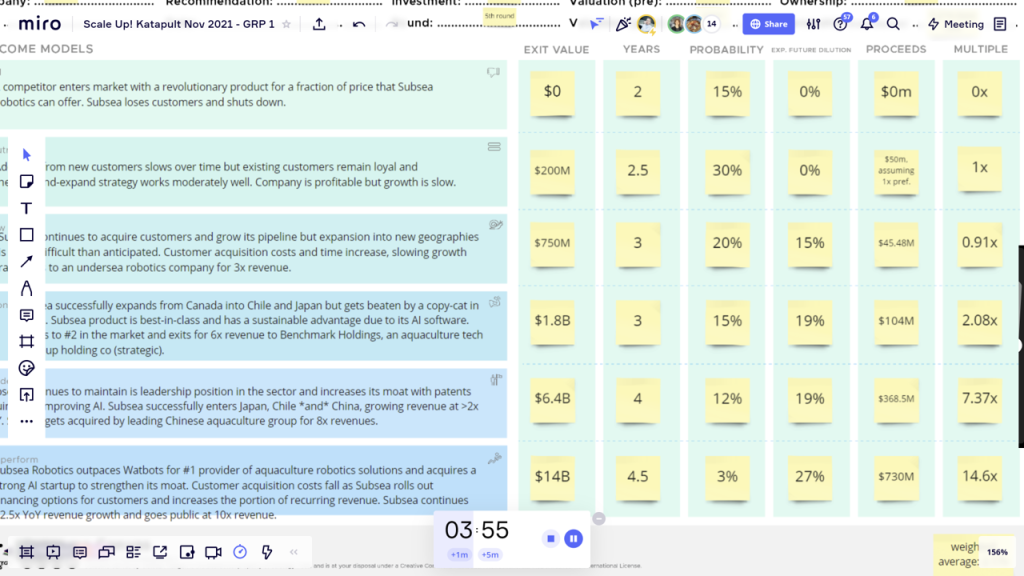
Pre-seed fundraising? Global market expansion? Cap table management? Growth stage fundraising? Long-term capital strategies? Partial liquidity? Investor outcomes? IPO process? Once you know your audience, decide on your core content. This is particularly important for choice of canvases you will be using.
4. What’s the outcome you seek?
When participants finish, what should they be able to do or know, that they did not going into the program? What do you want them to walk away with? What are the learning outcomes? The knowledge outcomes you expect to see? Make sure to spend time on this. Get this right. Upon completion of the participants should know: – – – and they should be able to do: – – –
5. What does ‘winning’ look like?
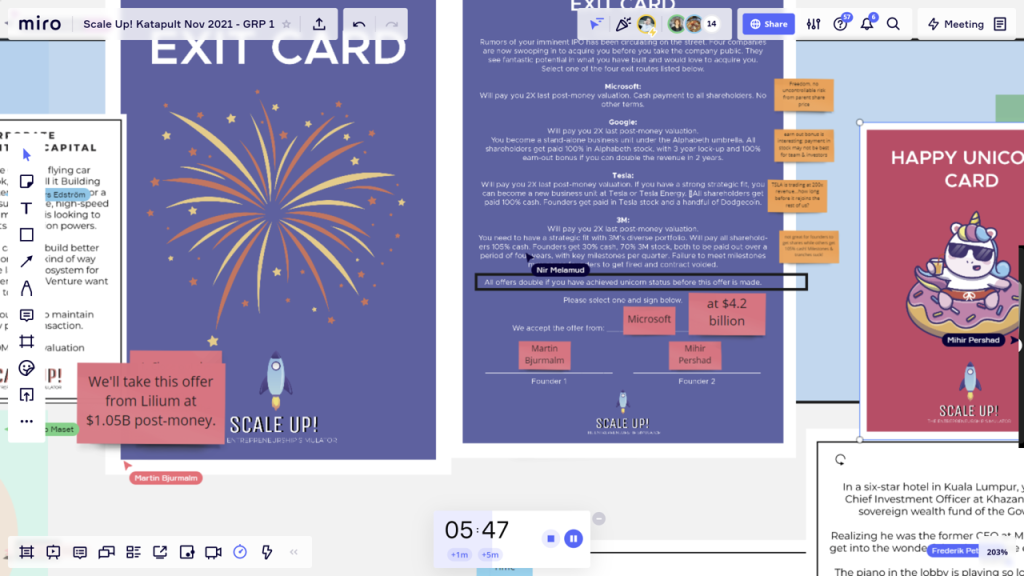
In Scale Up!, ‘winning’ can take many forms. It is 100% up to you to decide. Got super-early-stage founders? Make it ‘first team to raise three rounds – and make it over the goal line’. Or, ‘first team to hit 10M ARR – without going bankrupt – and make it over the goal line’.
More advanced, intermediate founders? ‘Raise six rounds of financing, complete at least one syndicate and hit 10M ARR – and make it over the goal line’. Or, ‘secure the best possible exit, simply’. Late-stage, advanced founders? ‘Best exit wins’, or ‘Lead the company through, seven rounds of financing, one syndicate, 10M ARR and a successful IPO transacttion’.
Before you start, always know – and communicate – what ‘winning’ looks like.
6. Program structure – or stand alone session?
Is this part of a larger program, likely an investor readiness program or an entirely stand-alone Masterclass? Are you running pre-session Webinars – or not? Our recommendation is generally to run one or two pre-session webinars in advance, to help participants tune in, set expectations and prepare.
Webinar 1: Introduction to Scale Up! Why we are doing this Background Three types of companies (SME, local tech, global tech, what are you building?) The Founder’ Journey – and the funding from idea to IPO Next steps (+ access to pre-read)
Webinar 2: Recap on introduction Financing the Founder’s journey Investment instruments overview Term sheets (real-life) and Investor cards Recommendations for how to best prepare (pre-read, pre-work, pre-videos)
7. Pre-read package
What are you providing the participants to read in advance? For Scale Up Africa Rising!, we are now developing the following pre-read package:
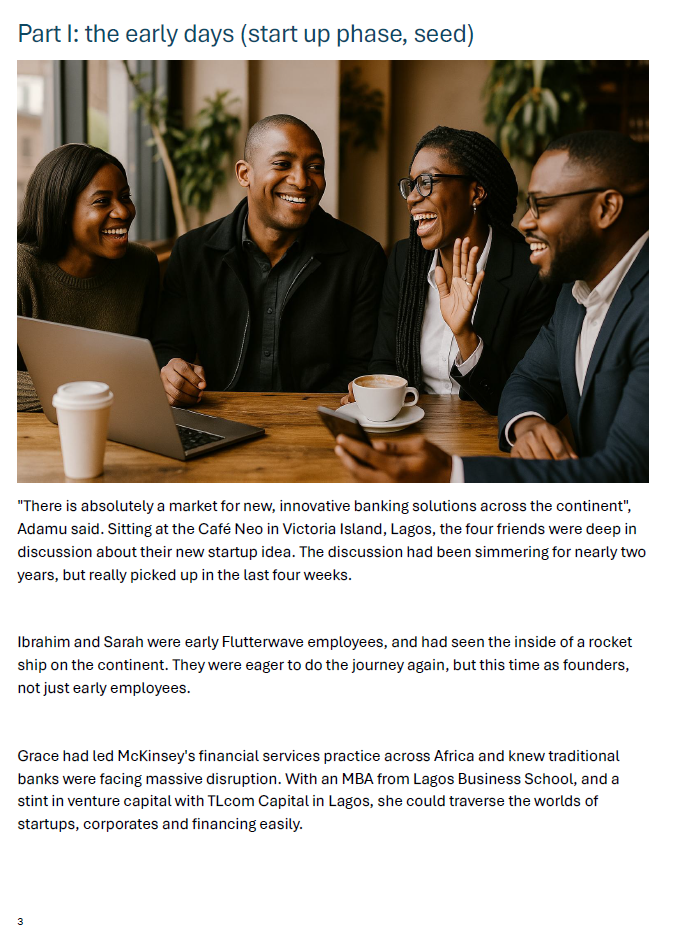
i. Case Study: Scaling Payzhub (50+ pages)
ii. Angel E-mail (core instructions)
iii. Team & Roles (team setup)
iv. Founder Handbook (explaining)
v. Real-life SAFE note (Example)
You, of course, select your own package.
8. Pre-work package
What are you putting together for the pre-work package? What are the pre-session training exercises you want people to do? Are you holding people accountable for completing it? Are you reviewing and giving people feedback before the session? Or, are you just saying ‘complete it, good luck’?
We know from experience that only 20% – 50% will complete the pre-work package, but the ones that do, will have a massive advantage and be key people on their respective teams. For Scale Up Africa Rising! Pre-work package we are doing:
I. Founder Handbook: 10 Building blocks (exercises) (40-60 pages)
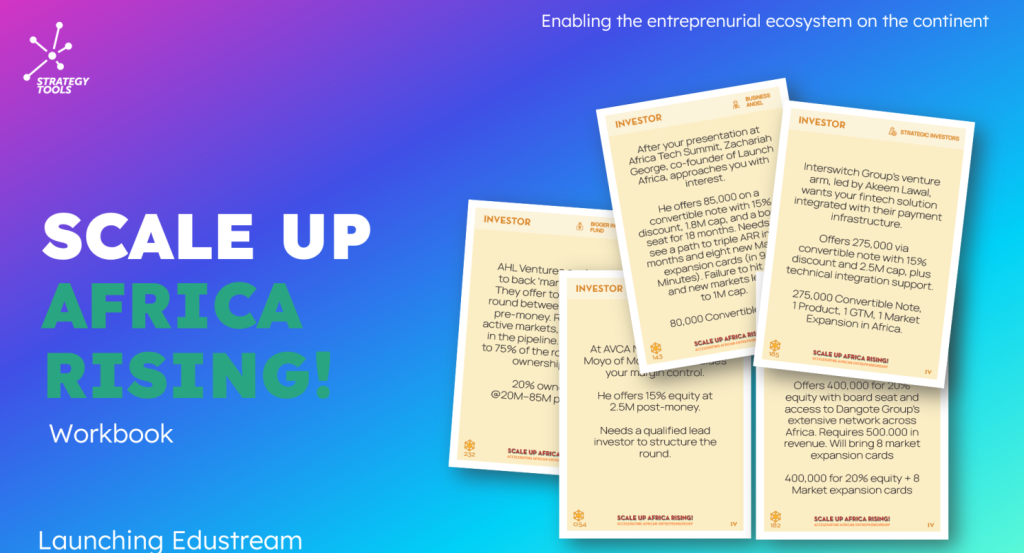
II. Founder Workbook: Edustream (exercises) (27 pages)
9. Pre-session videos
Are you using pre-session videos? If so, who’s shooting them? What’ the key content we focus on?
The videos we would recommend are.
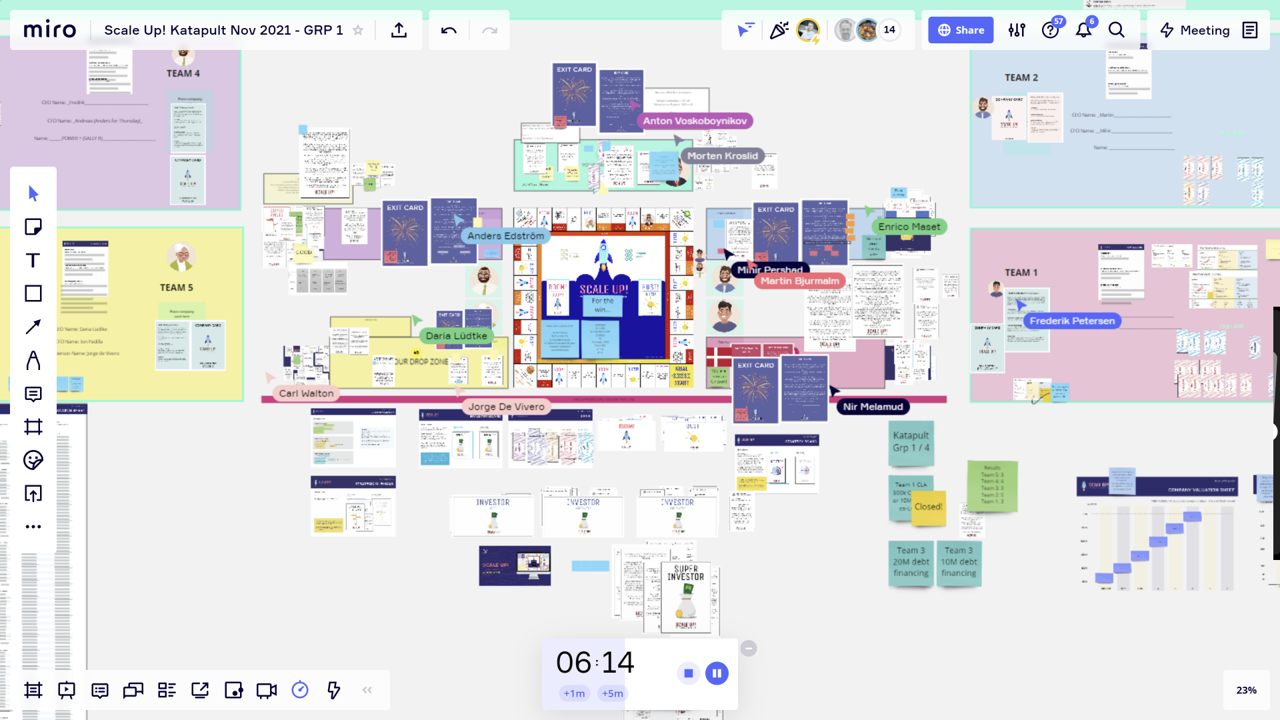
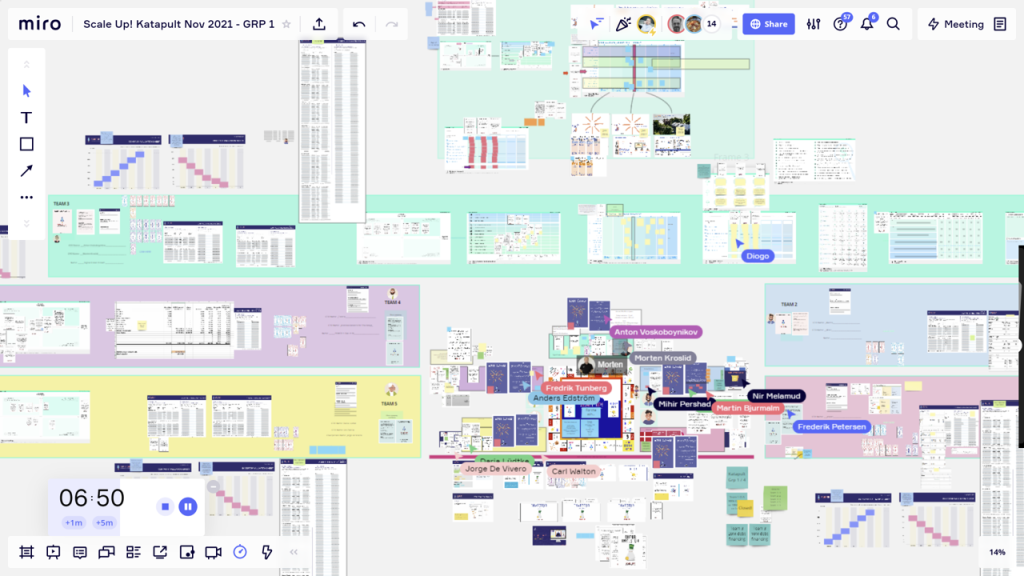
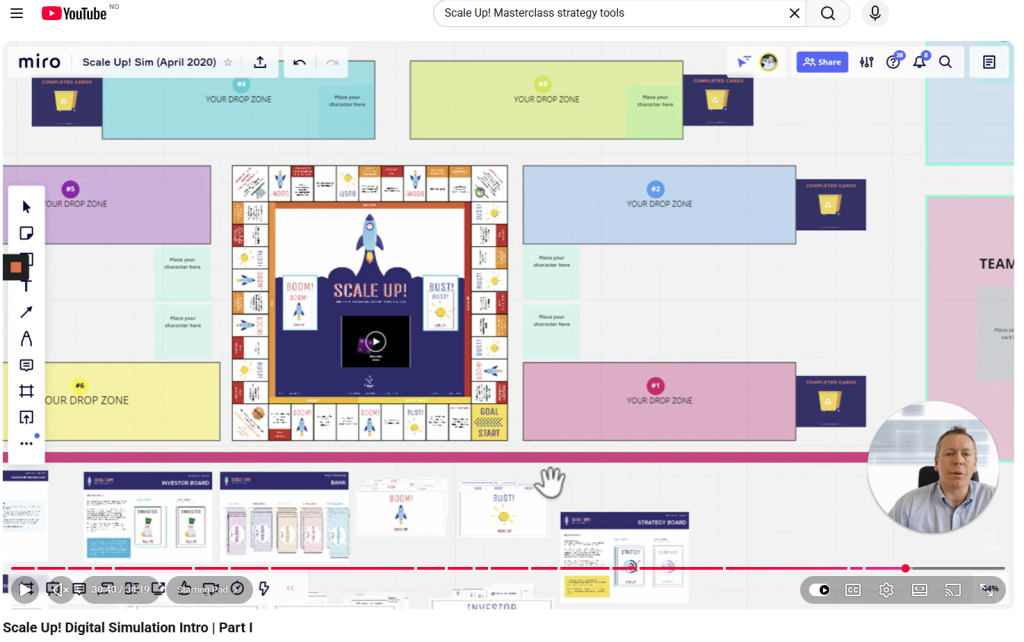
I. Intro & welcome video. Introducing Scale Up! Miro board overview. Walkthrough of the Miro board and how to navigate it (15. – 35. Min). (see example)
II. Pre-session exercises. Hands on training materials (15. min). (See example)
III. Founders Journey video (can be replaced by Webinar I)
IV. Investment Instruments, Video (with linkage to the pre-work package) (can be replaced by Webinar 2)
10. Is your detailed program design truly ready?
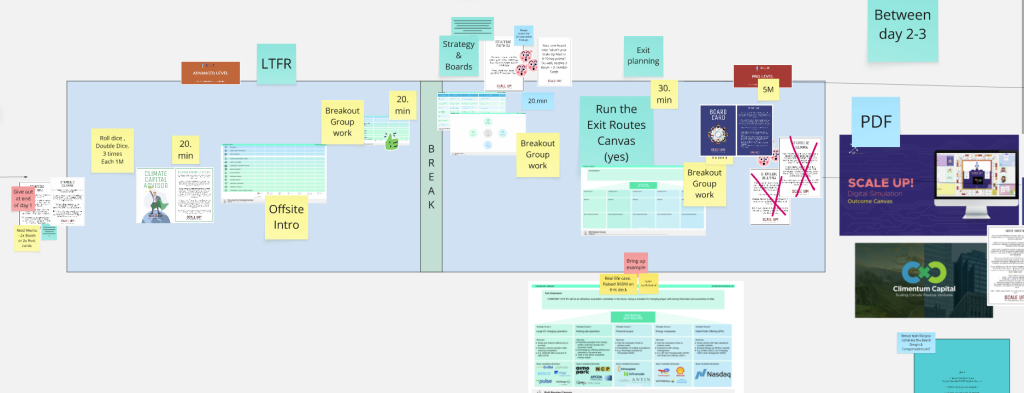
Have you mapped out every 15. Min block yet? Have you pre-selected all Founder Tasks and Strategic Dilemma you want to run? Have you clearly defined ‘milestones’ for end of each day? Running a Scale Up! without a detailed program design is…. Unwise.
- Offsites (for the roles, like CEO, CRO, CFO, etc)
- Breakouts (for the teams)
- Breaks (coffee breaks) (step away from the computer, for real)
- Plenary sessions (rolling dice, moving)
- Plenary sessions (for content, canvases, teaching)
- Everything need to be pre-arranged, clearly mapped out.
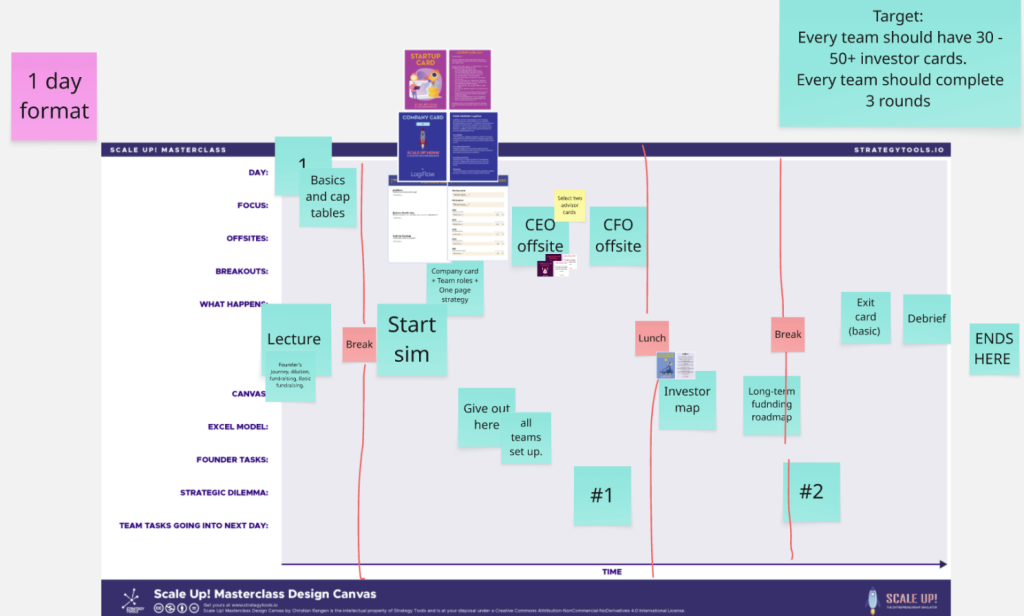
For example, if you want teams to make any decisions, they need to be in the same breakout room together. No offsites, expect to decisions. For every 60. Min (hour), plan for minimum two, maybe even three team breakouts.
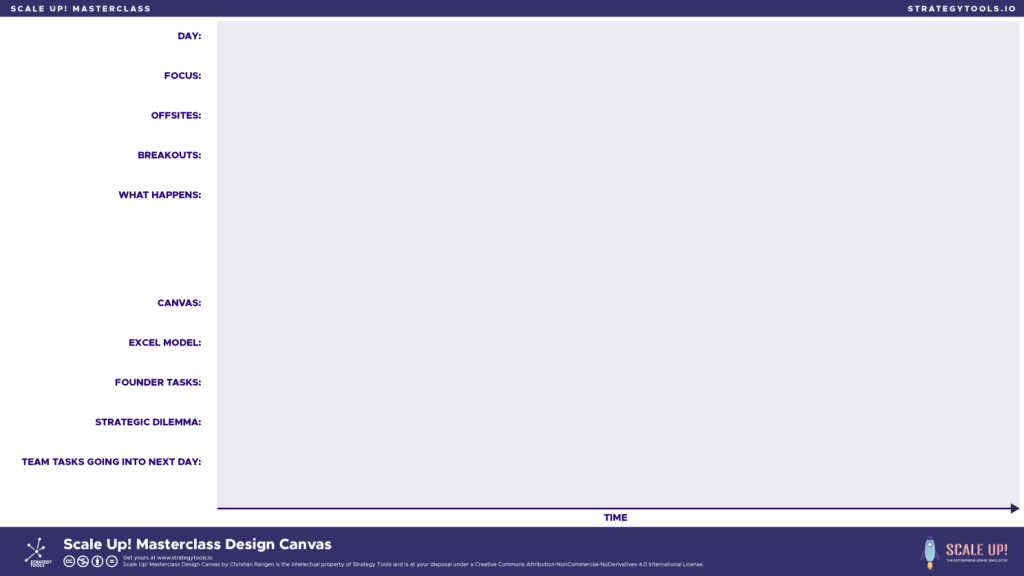
Running a true Masterclass? Plan your program in 15. Minute blocks. Seriously.
(Did you know, In our experience, if there is no detailed design in place, we tend to cover only 60% of the plan we hoped to cover for the day. With a detailed design in place, we are pretty much at 95% – 100%.)
11. Have you clearly assigned roles on the facilitator team?
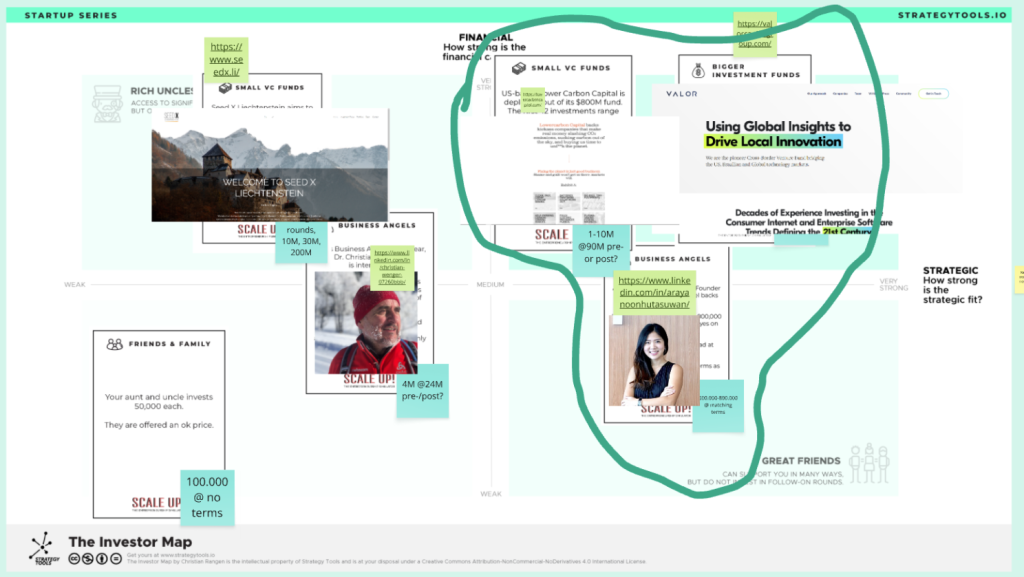
Who is leading the plenary and sharing screen? Who is handling cards? Who is leading the offsites? Who is jumping from room to room, to support the teams? Who is running the Investor Map, Long-term Funding Roadmap and Outcome Canvas? Who is helping teams with cap tables?
All this need to be pre-set in advance.
12. Is your logic flow in place
Scale Up! is structured around what we call the Founder’s Journey. Over a few days, we typically cover 6-10 years of ‘startup life’. Make sure your plan, your design capture this in a logical manner.
- Every roll with the dice represent a few weeks of ‘real life founder life’.
- Every square on the board represent ca. 9 days.
- Every length of the board represent 3 months or 90 days.
- Every round around the full board represent a full year.
This means, the entire first round around the board is year 1. Think about, what happens, really, in year 1. Team coming together, early customer discovery, a grant. Maybe an angel investor. Possibly an accelerator. Maybe a friends and family round. Maybe first revenue, often wrapped in a pilot structure. Possibly an advisor or two. Maybe a few new team members. That’s often it. Some companies will hit $100M ARR and level five product, go-to-market and expand into six markets, but that’s extremely unlikely. Plan for a ‘normal’ growth phase, where pre-seed, seed, seed+ and Series A takes 2-4 years, not 3-4 rolls with the dice.
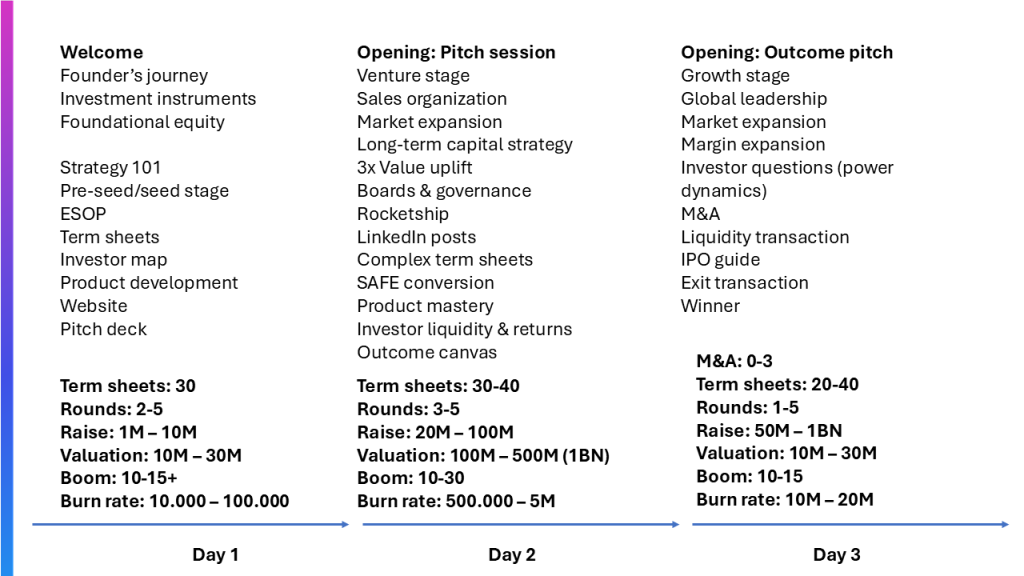
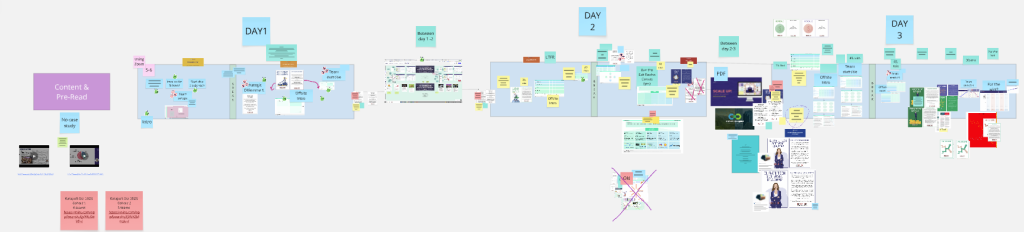
With an advanced group, in a three-day structure, here is how we think about the logic flow. Note, this is not suitable for early-stage or beginners, as you’ll need to move much slower on day one.
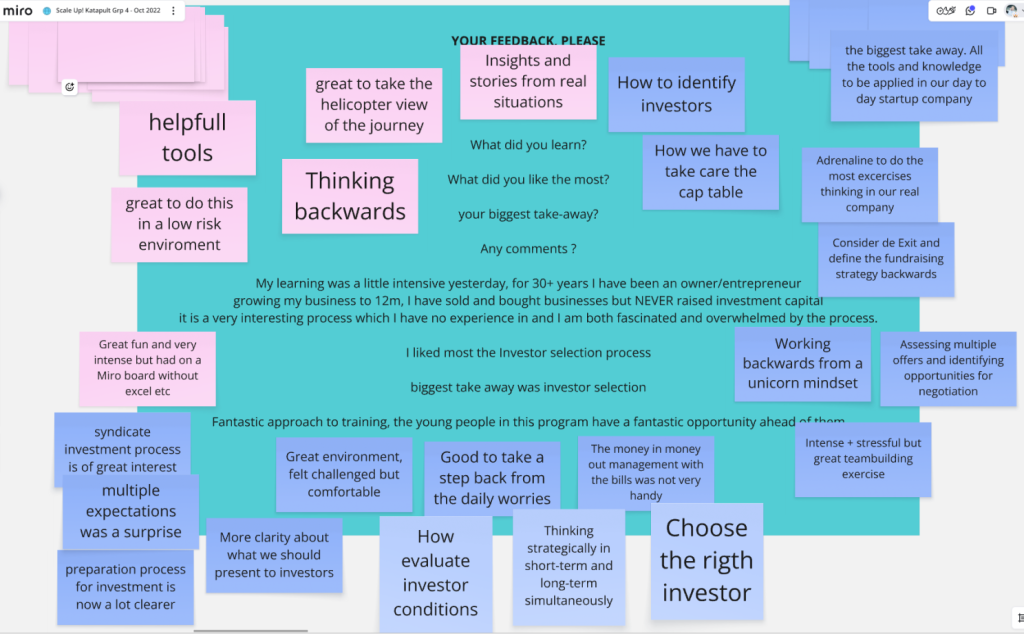
13. How much time do you allow for debrief?
Want to good ending? Always allow time for a structured debrief.
Use Miro and sticky notes or structured canvases, but do not skip the debrief.
14. What happens post-program?
Ok, you just wrapped up another great Masterclass. Now what?
How clear is your plan for next steps? Participant survey? Client debrief? Participant debrief? Project work? Real-life slide decks to review?
Be clear, always, on what happens next.
Your turn
ok, so if you are planning to run Scale Up! sessions, this guide can help you better structure and plan the entire workflow.
Good luck!