

“We just hit unicorn status!” the founder announced proudly at the Dubai Angel Network event. Congratulations flowed. Champagne corks popped. LinkedIn lit up.
But here’s the uncomfortable question nobody asked: How are you actually going to turn that into cash?
Welcome to the MENA ecosystem’s most misunderstood trio: value creation, value realization, and exit. They’re not the same thing—and confusing them could cost you everything.
Value Creation: Building the Beast
Value creation is what you do every day as a founder. It’s growing revenue from $1M to $10M. It’s securing that killer partnership with a regional bank. It’s building proprietary IP that nobody else has. It’s expanding from Dubai to Riyadh to Cairo.
Every new customer, every product launch, every market you enter, every patent you file—that’s value creation. Your company’s equity value increases. Your IP portfolio expands. Your team strengthens. Your competitive moat widens.
MENA is crushing it here. Dubai saw 26% year-on-year growth in scale-ups. Founders are building extraordinary companies with innovative solutions for regional challenges. The value creation engine is firing on all cylinders.
But here's the problem: value creation alone doesn't pay anyone.You can build a $500M company with incredible technology, dominant market share, and perfect unit economics. That’s phenomenal value creation. But if there’s no path to turn that value into cash? You’ve built a very expensive hobby.
Value Realization: The Forgotten Middle Step
This is where most MENA founders get lost.
Value realization isn’t the same as exit. It’s not a single event. It’s the mechanisms and paths you build to deliver liquidity back to investors and founders along the journey.
Think of value realization as your answer to: “How do we actually capture some of this value we’re creating?”
The Value Realization Toolkit includes:
Secondary Sales – Selling a portion of your shares to new investors or existing ones before exit. Smart MENA founders are negotiating secondary rights in Series B and C rounds, allowing them to take some chips off the table while the company continues scaling.
Partial Buyouts – Strategic investors or late-stage funds buying out a percentage of early investors’ positions. This creates liquidity for seed investors who’ve been in for 5+ years while you keep building.
Strategic Partnerships with Liquidity Components – When a regional bank or telecom takes a strategic stake and buys out some early angels in the process. You get the partnership and create early liquidity.
Dividend or Distribution Strategies – Rare in venture but increasingly discussed in MENA’s maturing ecosystem, especially for profitable scale-ups that don’t need to raise more capital.
Structured Secondaries with Growth Rounds – Setting up formal secondary processes alongside primary fundraising, where 20-30% of the round allows existing shareholders to sell.
The key insight? Value realization is something you plan and engineer—not something that magically happens at exit.
The MENA Reality: Great at Creating, Struggling at Realizing
Here’s what’s happening across the Middle East and North Africa right now:
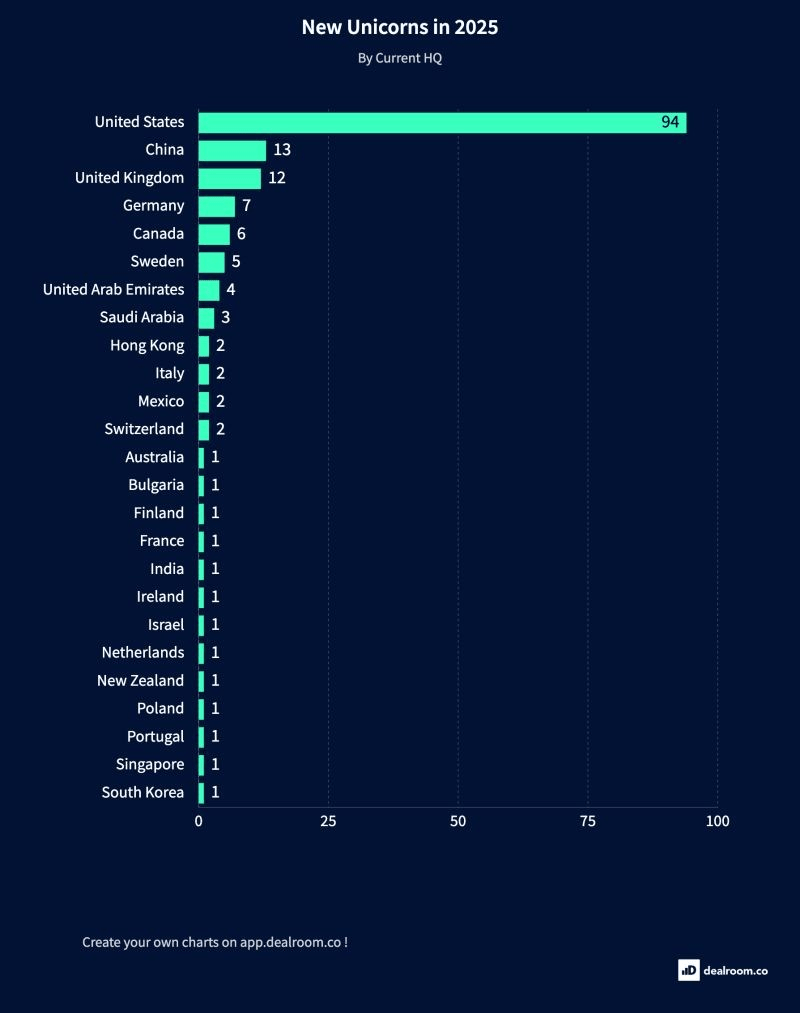
Value Creation: World-Class Founders are building incredible companies. Valuations are climbing. Innovation is exploding. The region is creating value as fast as Silicon Valley and faster than Southeast Asia. Just check out Deal Room’s new data.
Value Realization: Immature Most founders don’t even know these mechanisms exist. Term sheets don’t include secondary provisions. Cap tables aren’t structured for partial liquidity. Investors sometimes actively resist value realization pre-exit.
Result? Founders and early employees with massive paper valuations and zero liquid wealth. Angel investors who’ve been in for 7+ years with no path to returns. Early VCs showing strong MOIC and TVPI on paper but weak DPI (actual cash back to LPs).
Exit: The Bottleneck Strategic acquirers are selective. IPO markets are developing but not mature. Cross-border M&A is complex. Every founder is waiting for “the exit” while the value they’ve created remains locked up.
This is the critical gap in the MENA ecosystem: Mastered value creation. Haven’t mastered value realization – yet.
Exit: One Path, Not the Only Path
An exit—acquisition, merger, or IPO—is the full transfer of ownership. It’s the grand finale. The moment when everyone who holds equity realizes value simultaneously.
When Careem sold to Uber for $3.1 billion, that was an exit. It delivered massive value realization in a single transaction. Former employees walked away with cash to start new ventures. Early investors returned capital to their LPs. The “Careem Mafia” was born.
But here’s what the smartest MENA founders understand: Exit is just one value realization mechanism—and it shouldn’t be the only one you plan for.
Why? Because exits are:
- Uncertain (deals fall through constantly)
- Slow (18-36 months from first conversation to close)
- Rare (only a tiny percentage of companies achieve meaningful exits)
- Binary (you either exit or you don’t—there’s no middle ground)
If exit is your only value realization strategy, you’re betting everything on a single unlikely event.
What Smart MENA Founders Do Differently
1. Build Value Realization into Your Cap Table from Day One
When you’re raising seed or Series A, negotiate secondary provisions. Build in the right for founders and early employees to take 10-20% liquidity in future rounds. Structure your ESOP for partial exercises. Don’t wait until Series C to start these conversations.
2. Create a Value Realization Roadmap Alongside Your Growth Plan
Use tools like the Outcome Canvas to map specific liquidity events:
- Year 3: First founder secondary (10% of equity)
- Year 5: Seed investor partial exit opportunity
- Year 6: Strategic secondary or growth equity with buyout component
- Year 7-8: Full exit transaction
You’re not choosing between value realization and exit—you’re building a systematic path that includes both.
3. Educate Your Investors on Progressive Liquidity
Many MENA investors still have an “all or nothing” mentality. Your job is to help them understand that progressive value realization:
- De-risks the journey for everyone
- Keeps founders motivated for the long haul
- Proves the model works before the final exit
- Creates local success stories that strengthen the ecosystem
4. Look at Maturing Markets as Your Template
In Singapore, Switzerland, and increasingly parts of Asia, value realization is systematic. Secondary markets function efficiently. Late-stage funds expect to provide some liquidity to early investors. Founders take partial liquidity at Series B+ as standard practice.
MENA needs to adopt these practices. The infrastructure is slowly emerging—growth funds offering secondaries, family offices providing liquidity solutions, regional exchanges developing. But founders need to demand these mechanisms, not just wait for them to appear.
5. Don’t Confuse Paper Gains with Real Outcomes
Your company hitting a $1B valuation is value creation. It’s impressive. It’s meaningful. But it’s not value realization until someone can convert equity into cash.
Stop celebrating valuations like they’re victories. Start celebrating liquidity events—even small ones—because those prove the model actually works.
The Path Forward for MENA
The region is at an inflection point. We’ve proven we can create extraordinary value. Now we need to mature the mechanisms for realizing that value.
This means:
- Investors being open to structured secondaries and partial liquidity
- Founders demanding value realization provisions in term sheets
- Ecosystem builders creating secondary market infrastructure
- Government entities supporting liquidity mechanisms through policy
- Accelerators and advisors teaching founders about value realization paths
The difference between a mature startup ecosystem and an immature one isn’t value creation—it’s value realization infrastructure.
The Bottom Line
Value Creation = Building the company (revenue, IP, market share, team)
Value Realization = The mechanisms you use to deliver liquidity (secondaries, partial sales, strategic buyouts, and yes—exits)
Exit = One major value realization event (M&A, IPO), but not the only one
Liquidity = The actual cash that results from value realization
Stop thinking “build the company, then exit.” Start thinking “build the company, create progressive liquidity along the journey, then exit.”
The founders who master all three? They’re the ones who don’t just create paper wealth—they create generational outcomes for themselves, their teams, and their investors.
And they’re the ones who stick around long enough to build MENA’s next generation of billion-dollar companies.
At Strategy Tools, we work with MENA startups, VCs, and ecosystem builders to develop systematic approaches to value creation, value realization pathways, and exit execution. The Scale Up MENA! masterclass helps founders understand these critical distinctions—and build companies designed for liquid outcomes from day one.
The question isn’t just “What’s your company worth?” It’s “When and how do you convert that value into cash?”
In November 2025, we will be running five Scale Up MENA! Masterclasses in Dubai. In December, we are back in Cairo, Egypt again. Want to join us? Get in touch. [email protected]
Read more about the Scale Up MENA! Masterclass.
Thanks to Abdullah Mutawi , Scott Newton & Rick Rasmussen for inspiration for this post.