

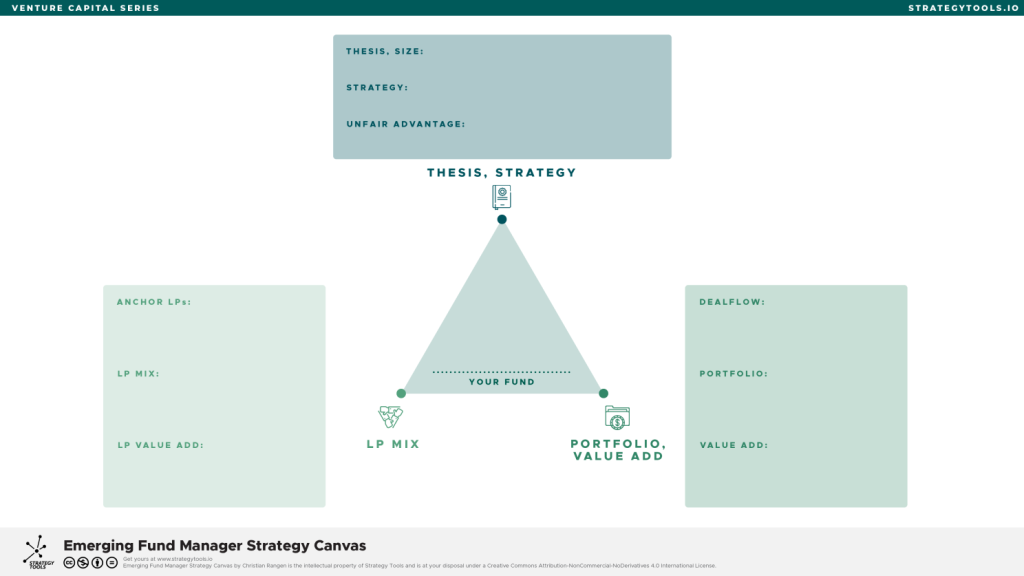
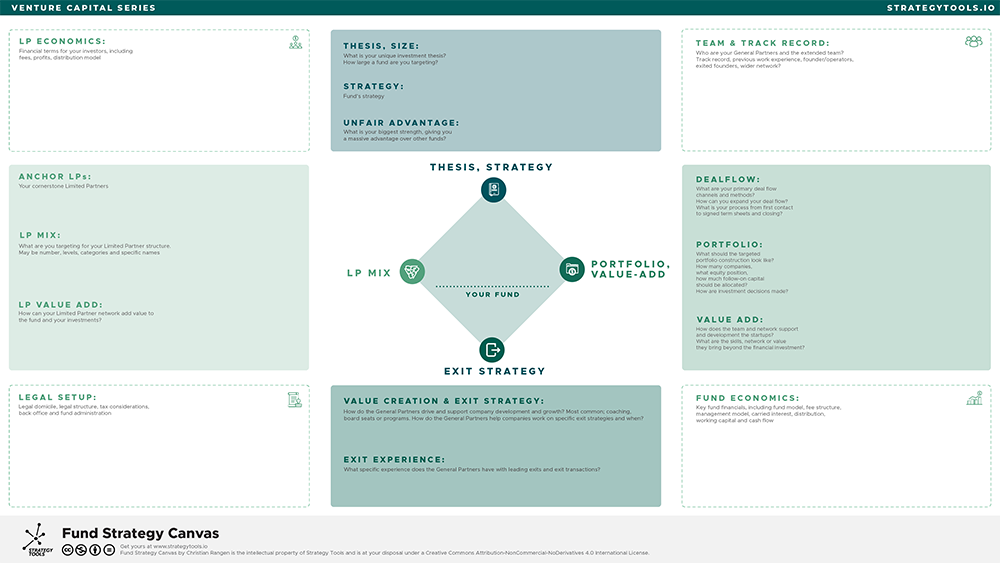
In our work with emerging managers and Fund-of-fund programs around the world, the ‘journey from emerging to institutional-ready’ is a common challenge for many first time fund managers to grasp. We wrote up the story of Nexus VC to show how to start small, start fast and scale a VC Firm into multiple VC funds and, hopefully, maturing into an institutional ready fund. We teach the same in our Fund Manager! Masterclasses
Second article leading up to the upcoming Dune Venture Days in Dubai.
The journey from emerging venture capital firm to institutional-grade investor represents one of the most complex organizational transformations in private markets. It’s not merely about deploying capital—it’s about building a repeatable system for identifying, winning, and supporting exceptional companies while generating top-quartile returns that justify institutional allocation.
A Dubai Story: The Nexus VC Journey
To understand this transition in practice, consider the story of Nexus VC, a Dubai-based early-stage VC firm that made the leap from emerging to institutional over seven years. Founded in 2016 by Chris Al-Mansour, a former corporate VC investor at a regional conglomerate, Nexus’s journey illustrates both the promise and the pitfalls of this transformation.
Chris started with a conviction: the MENA tech ecosystem was reaching an inflection point, with a new generation of founders building scalable businesses that international investors were missing. His thesis—seed and Series A investments in technology companies solving regional challenges with global potential—had worked in his previous role, but he’d always invested someone else’s capital. Building his own firm would be different.
The Capital Structure Evolution
Stage One: Proof of Concept ($500K–$5M)
Nexus’s Genesis (2016-2017)
You only have a few hours, truly, what are you going to focus on?
Chris began where nearly every VC begins: with a small pool of flexible capital. He raised his first $2M fund from a tight network of supporters. The “fund formation” was a simple LP agreement drafted by a regional law firm ($15,000). The “office” was a co-working space membership at AstroLabs in Dubai. The “deal flow” was his personal network and cold LinkedIn outreach.
The earliest capital represents validation, not optimization. At this stage, VC firms are typically operating under sub-optimal structures:
Fund Structure Considerations:
GP commitment usually 1%–2% of fund size (for first fund, often reduced)
Nexus Fund I – The Capital Stack:
- Chris’s personal capital: $50,000 (2.5% GP commit, significant for someone in their early 30s)
- Former boss at the conglomerate: $500,000
- Three family offices: $300K, $250K, $200K
- Five HNW individuals: $100K each ($500K total)
- Two successful entrepreneurs: $150K each ($300K total)
Total: $2.05M fund size
Operational Reality: The GP is typically wearing every hat—deal sourcing, due diligence, portfolio support, fundraising, back office, and investor relations. Technology stack consists of Excel, a basic CRM, and perhaps a simple data room. Legal work is outsourced to the cheapest responsive firm.
Chris was everything. He sourced deals through founder events, conducted due diligence with Excel models and reference calls, negotiated term sheets, sat on boards, supported portfolio companies, managed LP communications, and handled fund accounting. His “tech stack” was Gmail, Excel, a $50/month Airtable subscription for deal tracking, and DocuSign.
The Investment Strategy:
- Check size: $50K–$150K at seed stage
- Ownership target: 5%–10%
- Sector focus: B2B SaaS, fintech, logistics tech
- Geographic focus: UAE, Egypt, Saudi Arabia
- Follow-on reserves: ~30% of fund size
First Investments (2017):
Chris moved quickly. By end of 2017, he’d deployed into four companies:
- A B2B procurement platform in UAE ($100K)
- An Egyptian fintech startup ($75K)
- A Saudi logistics SaaS company ($120K)
- A Dubai-based HR tech startup ($80K)
Total deployed: $375K across four companies. He’d created a mini-portfolio, but the real work—and uncertainty—was just beginning.
Stage Two: The Inflection Point ($5M–$30M)
Nexus’s Growing Pains (2018-2021)
This is where most emerging VCs fail. The fund is past the friends-and-family stage but hasn’t achieved the scale for institutional attention. This zone represents maximum operational stress per dollar of AUM.
Through 2018-2019, Chris continued deploying Fund I. He made eight more investments, bringing the total to 12 portfolio companies with $1.6M deployed. He reserved $450K for follow-ons and kept $150K for operating expenses (management fees of $41K annually weren’t enough to support operations fully).
Early Portfolio Signals:
- Two companies failed outright
- Three were struggling and likely to fail
- Five were showing decent traction but needed follow-on capital
- Two were showing exceptional growth—the Egyptian fintech and the Saudi logistics company
The problem: Chris needed to raise Fund II to follow on his winners, but institutional investors wanted to see realized returns from Fund I. He was stuck in the classic emerging VC trap.
The Infrastructure Build-Out:
At approximately $10M under management, economics begin to support institutional infrastructure, though painfully:
After legal and compliance ($50K–$75K), fund administration ($25K–$40K), technology ($15K–$25K), and events/travel ($40K–$60K), there’s barely enough for one salary
The First Hire Decision:
In mid-2019, as Chris began raising Fund II, he faced his first critical decision: hire someone or continue solo. He chose to stay lean through Fund II raise but made a promise to himself—first hire once Fund II closed.
Fund II Raise (2019-2020):
Chris’s pitch for Fund II:
- Fund I portfolio showing signs of life (paper markups from the two breakout companies)
- Expanded thesis: earlier stage (more pre-seed/seed), larger fund for follow-on capability
- Target: $10M
- Same terms: 2.5%/20% with 8% preferred return
- GP commit: 2% ($200K, mostly through deferring management fees)
The raise was brutal. Chris pitched 420+ potential investors over 18 months:
- Existing Fund I LPs: $3.5M (70% re-up rate by capital)
- New family offices: $2.8M (through extensive networking)
- Regional institutional investor (sovereign wealth fund’s emerging manager program): $2M (breakthrough allocation after 9-month diligence)
- Small fund-of-funds focused on emerging managers: $1.5M
- New HNW individuals: $1.2M
Total: $11M closed by September 2020
The sovereign wealth fund allocation changed everything. Even though $2M was a pilot check for them, it provided institutional validation that Chris could leverage.
Critical Hires and Sequencing:
The hiring sequence matters enormously for VCs. The optimal path is typically:
- First hire (~$10M AUM): A principal/associate who can source deals, conduct diligence, and support portfolio companies—compensation $100K–$150K plus carry participation
- Second hire (~$25M AUM): Either a portfolio operations person (platform team) or another investing partner, depending on firm strategy
- Third hire (~$50M AUM): Whatever role wasn’t filled in step two, or a dedicated CFO/COO
The First Hire (October 2020):
Chris brought on Daniel Kim, a Korean-Canadian investor he’d met through the regional startup ecosystem. Daniel had spent three years at a larger regional VC and had strong networks with founders and co-investors. Compensation: $110,000 base plus 5% of carry on Fund II (vesting over 4 years) plus 8% management company equity.
Daniel became Chris’s investment partner—sourcing deals, conducting diligence, supporting portfolio companies. The two-person investment team could now cover more ground.
Service Provider Maturation:
This stage requires upgrading from startup-friendly vendors to institutionally acceptable ones:
- Fund Administrator: Moving from DIY accounting to a recognized name (Standish, Otter, Carta for smaller funds; SS&C, Citco, Gen II for larger)—cost increases from near-zero to $30K–$60K annually
- Auditor: Moving from a local CPA firm to a Big Four or national firm with PE/VC expertise (BDO, Grant Thornton, RSM, or ideally PwC, KPMG, Deloitte, EY)
- Legal Counsel: Establishing relationships with dedicated VC fund formation attorneys (Debevoise, Ropes & Gray, Goodwin, Latham, but regionally Dechert or DLA Piper)
- Back-office Infrastructure: Portfolio monitoring systems (Carta, Pulley for cap tables; Visible, 4Degrees, or Affinity for CRM)
With Fund II capital, Chris invested in infrastructure:
- Hired Otter as fund administrator ($35K annually)
- Engaged Deloitte for annual fund audit ($50K)
- Retained Dechert LLP for ongoing fund and deal legal work ($100K annually)
- Subscribed to Carta for portfolio tracking and Affinity for CRM ($15K annually combined)
- Moved into a small dedicated office in DIFC (2 desks, $30K annually)
These costs now came from a larger management fee base ($275K annually from Fund II), but margins remained thin.
Performance and Track Record Building:
At this stage, institutional prospects will begin conducting diligence. They expect to see:
- Realized returns (not just paper markups) demonstrating ability to identify and exit winners
- Portfolio construction that shows discipline and strategy adherence
- Value-add capabilities beyond just writing checks
- Network effects and deal flow quality
- Co-investor quality as validation
By mid-2021, Chris had meaningful data points:
- The Egyptian fintech (Fund I) had been acquired by a regional bank—3.8x gross MOIC in 3.5 years
- The Saudi logistics company (Fund I) raised a $15M Series B at a $60M valuation—Chris’s stake marked at 5.2x
- Fund I DPI (distributed to paid-in capital): 0.4x (from the fintech exit)
- Fund I TVPI (total value to paid-in capital): 2.1x on paper
- Fund II was actively deploying with 8 investments made by mid-2021
Stage Three: Institutional Threshold ($30M–$100M)
Nexus’s Institutional Breakthrough (2021-2023)
Crossing $30M AUM represents an invisible but critical line for VCs. Institutional allocators begin to take meetings. The fund has enough AUM to suggest market validation but isn’t so large that the opportunity set is constrained.
In Q4 2021, with Fund II partially deployed and Fund I showing real returns, Chris began exploring Fund III. His target: $30M–$40M, which would push Nexus firmly into institutional territory.
The Consultant Ecosystem:
Access to institutional VC capital increasingly runs through gatekeepers:
- Placement Agents: Third-party fundraisers specializing in emerging managers, typically working for 2%–3% of capital raised with placement fees paid from GP or as an additional LP commitment
- Fund of Funds: Aggregators like Horsley Bridge, Greenspring, Top Tier, HarbourVest who can write $3M–$10M checks and provide institutional validation
- Institutional LPs: Pension plans, endowments, foundations, sovereign wealth funds with emerging manager programs
- Family Offices: Increasingly sophisticated with dedicated alternative investment staff
Chris faced a decision: hire a placement agent or build institutional relationships organically. He chose the latter—partially from conviction that relationship-building was more sustainable, partially because placement agent fees on a $40M fund ($800K–$1.2M) seemed prohibitive.
The Second Hire (January 2022):
Chris brought on Joshua Martinez as VP of Platform & CFO. Joshua had spent five years in VC operations and portfolio support and understood both the investment side and operational requirements. Compensation: $130,000 plus 3% carry on Fund III plus 6% management company equity.
Joshua’s mandate:
- Build portfolio support capabilities (recruiting, customer intros, follow-on fundraising support)
- Professionalize fund operations and reporting
- Support Fund III fundraising with data room preparation and LP reporting
The Third Hire (June 2022):
As Fund III fundraising progressed, Chris hired Malika Khair as Partner focused on Investor Relations and Business Development. Malika had spent eight years at a regional institutional investor evaluating VC funds and had relationships with LPs across the GCC and Europe. Compensation: $150,000 plus 2% carry on Fund III plus 5% management company equity.
Her immediate impact was professionalizing LP communications and opening doors to institutional allocators who wouldn’t have responded to cold outreach.
Due Diligence Intensity:
Institutional VC due diligence is comprehensive and multi-layered:
- Strategy assessment: Is the thesis differentiated? Is it sustainable? What’s the competitive moat?
- Team evaluation: Track record of individuals, team dynamics, reference checks with founders and co-investors
- Performance analysis: Portfolio construction, deal flow quality, value-add capabilities, follow-on discipline
- Operations review: Fund administration, compliance, portfolio tracking, reporting capabilities
- Reference calls: Portfolio company founders, co-investors, service providers, other LPs
- Scenario analysis: How does fund perform across different outcome scenarios? What’s the path to top quartile?
In Q2 2022, Nexus underwent its first institutional operational due diligence. A $3B European pension fund with a dedicated emerging manager allocation sent a two-person team to Dubai for a week. They:
- Interviewed the entire team separately
- Called 10 portfolio company founders for references
- Spoke with 5 co-investors about Nexus’s reputation
- Reviewed all fund documents, side letters, and carried interest calculations
- Analyzed deal flow metrics, pass rates, and investment decision-making
- Examined portfolio monitoring and value-add frameworks
- Assessed fund economics and alignment of interests
The process was exhaustive. Three months later, in August 2022, the pension fund committed €3M (~$3M) to Fund III.
Fund III Fundraising (2022-2023):
Chris’s pitch for Fund III evolved:
- Fund I: 2.8x TVPI with 0.6x DPI (two exits realized, three more in process)
- Fund II: 1.6x TVPI early, but portfolio showing strong signals
- Proven sourcing in underinvested market
- Platform capabilities to support companies through scale
- Target: $40M with potential to upsize to $50M
- Terms: 2%/20% with 8% preferred, improving to institutional standards (quarterly reporting, LPAC formation, key person provisions)
The fundraising took 18 months:
- Existing LPs (Funds I & II): $12M (strong re-up rate)
- European pension fund: $3M (breakthrough institutional LP)
- Two regional sovereign wealth fund programs: $8M combined (both emerging manager allocations)
- Established fund-of-funds (Top Tier Capital): $5M (validation from recognized name)
- US-based endowment: $4M (first North American institutional LP)
- Family offices: $6M (increasingly sophisticated allocators)
- New HNW individuals: $2M
Total: $40M final close in June 2023
The fund-of-funds and US endowment commitments were game-changers. Both required extensive diligence, but their presence in the cap table signaled to other institutions that Nexus had arrived.
Terms Standardization:
To attract institutional capital, fund terms must align with market standards:
- Management fees: 2% on committed capital during investment period, 1.5%–2% on invested capital post-investment period (some funds use NAV basis)
- Carry: 20% remains standard, with 8% preferred return (some institutions push for 10%)
- GP commit: 2%–3% of fund size (increasingly enforced)
- Key person provisions: if Chris or Daniel left, investment period suspended
- LPAC formation: 3–5 seats representing major LPs
- Reporting: quarterly detailed reports with portfolio company updates and fund performance
- No-fault divorce provisions: LPs can remove GP under certain circumstances
- Clawback provisions: ensuring carry is only paid on realized profits
Fund III incorporated all institutional standard terms. Chris and Daniel committed $1.2M combined (3% GP commit), primarily through management fee deferrals and personal capital.
The Destination: Institutional VC Firm ($50M+)
Capital Deployment at Scale
Nexus’s Institutional Operations (2023-Present)
With $40M in Fund III, Nexus operated as an institutional VC firm. The transformation was complete in structure, if not yet in scale.
Deployment Strategy:
- Check sizes increased: $200K–$500K seed, up to $1M+ Series A
- Ownership targets: 7%–15% at initial investment
- Portfolio construction: 20–25 companies in Fund III
- Reserve ratio: 40% for follow-ons (recognizing winners early and supporting them aggressively)
- Geographic expansion: maintaining MENA focus but open to global opportunities for exceptional founders
The Team at Scale:
At institutional scale, VC teams must professionalize across all functions:
Investment Team:
- Managing Partners drive strategy and make final investment decisions
- Partners/Principals source deals, lead diligence, take board seats
- Associates/Analysts support diligence, portfolio monitoring, market research
- Venture Partners/Advisors provide domain expertise and deal flow
By 2024, Nexus’s investment team:
- Chris (Managing Partner) – focused on strategy, key deals, Fund IV planning
- Daniel (Partner) – actively sourcing and leading investments, 4 board seats
- Two Principals hired in 2023 ($140K each plus carry participation) – deal flow and execution
- Two Associates ($90K each) – supporting diligence and portfolio companies
Platform/Operations Team:
- Platform professionals supporting portfolio companies (recruiting, sales, fundraising)
- CFO/COO managing fund operations, compliance, and administration
- IR/capital formation professionals managing LP relationships and fundraising
Joshua’s platform team:
- Portfolio talent specialist ($95K) – recruiting support for portfolio companies
- Platform associate ($75K) – coordinating portfolio events and resources
- Joshua (VP Platform/CFO) – overall operations and portfolio support
Malika’s IR team:
- IR associate ($85K) – managing quarterly reporting and LP communications
- Malika (Partner, IR & Business Development) – institutional relationships and Fund IV preparation
Total team: 11 professionals (6 investment, 5 platform/ops)
Operational Infrastructure at Institutional Scale
Technology Stack:
- Fund administration platforms (Carta, Allocate, Juniper Square)
- Portfolio monitoring systems (Visible, Chronograph, Kushim)
- CRM and deal flow management (Affinity, 4Degrees, Sourcewhale)
- Data rooms and document management (DocSend, Dropbox, DealRoom)
- Communication and collaboration tools (Slack, Notion, Airtable)
- Analytics and benchmarking (Cambridge Associates, PitchBook, Preqin)
Nexus’s tech stack in 2024:
- Carta for fund administration and portfolio cap table management ($60K annually)
- Visible for portfolio monitoring and LP reporting ($25K annually)
- Affinity for CRM and relationship management ($40K annually)
- PitchBook for market intelligence and benchmarking ($35K annually)
- Various other tools ($20K annually)
Total technology spend: $180K annually (up from $15K in Fund I days)
Governance and Oversight:
- LPAC formation with 3–5 institutional LP representatives
- Annual LP meetings (typically in-person at major LP gatherings)
- Quarterly reporting with detailed portfolio updates and fund performance
- Independent valuations for portfolio companies (409A or fairness opinions)
- Comprehensive compliance program with annual testing
- Advisory boards with domain experts and successful entrepreneurs
Fund III LPAC (formed Q4 2023):
- European pension fund representative
- Top Tier Capital representative
- Sovereign wealth fund representative (rotating seat)
- US endowment representative
- Independent member (successful serial entrepreneur and LP)
The LPAC met quarterly to review:
- Fund strategy and any proposed changes
- New investments above certain size thresholds
- Portfolio company challenges or restructurings
- Key person issues or organizational changes
- Follow-on fund planning and terms
Insurance and Risk Management:
- D&O insurance: $10M coverage
- E&O insurance: $5M coverage
- Cybersecurity insurance: $3M coverage
- Fidelity bond: $2M coverage
- Key person insurance on Chris
Fund Lifecycle and Returns Management
Successful institutional VC firms manage multiple vintage years simultaneously:
- Active deployment from newest fund
- Active portfolio management across all funds
- Exit planning and DPI generation for older funds
- Follow-on decisions across fund vintages
- Fund IV fundraising while Fund III deploys
Nexus Fund Portfolio (2024 Snapshot):
Fund I ($2M, 2017 vintage):
- 12 investments, 10 still active (2 failed completely)
- 3 exits realized (fintech acquisition, two acqui-hires)
- 2 strong companies likely to exit at meaningful multiples (logistics unicorn, B2B SaaS)
- Current metrics: 3.2x TVPI, 1.1x DPI (distributions improving as exits materialize)
- Top quartile for vintage and geography
Fund II ($11M, 2020 vintage):
- 18 investments, 16 active (2 failures)
- 1 exit realized (modest return)
- 5 companies showing exceptional growth, raised follow-on rounds at significant markups
- Current metrics: 2.4x TVPI, 0.3x DPI
- Tracking toward top quartile
Fund III ($40M, 2023 vintage):
- 12 investments deployed (~$8M), investment period ongoing
- Early to assess performance, but initial companies showing traction
- Deal flow significantly improved with institutional backing
Exit Strategy and DPI Generation:
Institutional LPs increasingly focus on realized returns (DPI), not just paper markups (TVPI):
- Exit pathways: M&A (most common in emerging markets), secondary sales, IPOs (rare)
- Active management of exit timing—knowing when to sell vs. hold for next round
- Secondary market solutions for liquidity before traditional exits
- Engaging with investment banks and corporate development teams early
Chris and Daniel actively worked exit opportunities:
- The Fund I logistics company had become a unicorn ($1.2B valuation in 2023). Chris faced a decision: sell secondary stake (5x–6x) or hold for potential IPO (10x+ but uncertain timing). After LPAC consultation, he partially exited (50% of position) in a structured secondary, generating meaningful DPI for Fund I while retaining upside.
- Two Fund II companies received acquisition interest from larger strategics. Chris negotiated exits at 4x and 3.5x MOIC respectively.
By 2024, Fund I was approaching final distributions with strong returns. This performance became critical for Fund IV discussions.
The Critical Success Factors for VC Firms
Performance and Track Record
Institutional VC investors evaluate firms on multiple dimensions:
- Gross and net returns: Top quartile benchmarking (need 3x+ net MOIC for top quartile in most vintage years)
- DPI generation: Actual cash returned to LPs, not just paper gains
- Investment discipline: Pass rate, portfolio construction, follow-on management
- Value creation: Evidence of value-add beyond capital
- Deal access: Quality of deal flow and competitive win rate
- Portfolio outcomes distribution: How concentrated are returns? (VC follows power law)
Nexus’s track record (2024):
- Fund I: 3.2x TVPI, 1.1x DPI (top quartile for vintage)
- Fund II: 2.4x TVPI, 0.3x DPI (tracking top quartile)
- Deal flow: 800+ companies reviewed in 2023, 12 investments (1.5% conversion)
- Competitive win rate: 75% of term sheets accepted (high for region)
- Portfolio support: 85% of portfolio companies reported Nexus as helpful or very helpful in annual survey
- Follow-on signaling: 90% of Nexus portfolio companies that raised follow-on rounds received additional Nexus capital
Team Quality and Stability
LPs invest in teams, not just strategies:
- Track record of individuals: What have they built or backed before?
- Team dynamics: How do they work together? Is there alignment?
- Retention: Has there been turnover? Are people locked in with golden handcuffs?
- Succession planning: What happens if the founder leaves?
- Diversity of thought: Different perspectives and backgrounds strengthen decision-making
Nexus’s team stability:
- Zero turnover in core team (Chris, Daniel, Joshua, Malika) over 6 years
- Management company equity: Chris 65%, Daniel 12%, Joshua 8%, Malika 7%, option pool 8%
- Carry allocation clearly defined across funds with vesting structures
- Decision-making process documented: Chris and Daniel both had veto rights on investments, but decisions made by consensus
- Succession: Daniel capable of leading firm if Chris unavailable
Deal Flow and Market Position
Sustainable deal flow is the lifeblood of VC:
- Founder networks: Do great founders come to you first?
- Co-investor relationships: Do top firms want to co-invest with you?
- Brand in market: Are you known for specific expertise or value-add?
- Geographic or sector moats: Do you have differentiated access?
- Platform capabilities: Can you help companies beyond just capital?
Nexus’s market position (2024):
- Recognized brand in MENA tech ecosystem—founders sought Nexus out
- Strong co-investor relationships with international tier-1 VCs (Sequoia, Accel, Index, others) who valued regional presence
- Domain expertise in fintech, logistics tech, B2B SaaS recognized by founders
- Platform capabilities (recruiting, sales intros, fundraising support) differentiated from pure-play capital providers
- Chris and Daniel both regular speakers at regional startup events, active on social media, published thought leadership
Alignment and Economics
LPs scrutinize fund economics rigorously:
- GP commit: Is GP capital at risk alongside LPs?
- Management fee structure: Are fees appropriate for fund size and strategy?
- Carry structure: Is carry aligned with LP returns (hurdles, catch-up provisions)?
- Conflicts of interest: Side vehicles, SPVs, management company conflicts?
- Transparency: Are fund economics clearly communicated?
Nexus’s alignment:
- GP commit: 3% across all funds (Chris and Daniel’s personal capital at risk)
- Management fees: 2% committed capital during investment period, reducing to 1.75% on invested capital (lower than many peers)
- Carry: 20% with 8% preferred return, subject to clawback
- No side vehicles or management company conflicts
- Full transparency on fees and expenses in quarterly reports
The Institutional Mindset Shift
The transition from emerging to institutional VC isn’t just operational—it’s philosophical. Emerging VCs optimize for access and survival. Institutional VCs optimize for repeatable process, portfolio construction, and sustainable returns.
Chris’s Reflection (2026):
In a conversation with a prospective emerging VC seeking advice, Chris reflected on the journey:
“The hardest lesson was learning that being a good investor doesn’t make you a good fund manager. They’re different skills. In the early days, I thought if I just picked good companies, everything else would work out. But institutional investors don’t just want good picks—they want evidence of a repeatable process, proof that you can do it again and again.
That meant formalizing everything. Our investment memos went from 3-page Word docs to 25-page structured analyses. Our portfolio monitoring went from ‘check in with founders’ to quarterly board meetings with KPI tracking. Our fundraising went from begging for meetings to LPs calling us.
The other big shift was time horizon. Emerging VCs think fund-to-fund—’I need returns from Fund I to raise Fund II.’ Institutional VCs think in decades—’How do we build a multi-generational firm?’ That changes how you think about team building, portfolio construction, and market positioning.
And honestly? The economics compress. Fund I, when it was just me, I probably cleared 70% margins on management fees after minimal costs. Fund III, with a team of 11 and real infrastructure, we’re running at 35%–40% margins. But it’s a bigger base, the business is sustainable, and we’re not dependent on me not getting hit by a bus.
The valley between $5M and $30M under management is where most VCs die. You’re too big to run lean, too small to afford infrastructure. You need returns from your early funds, but those take 7–10 years to materialize. It’s brutal. We survived because we stayed disciplined, hired intentionally, and always thought about what institutional LPs would require—even when we didn’t have institutional LPs yet.”
This means:
- Building repeatable processes over gut-feel investing
- Accepting that team building and operational excellence matter as much as deal picking
- Recognizing that LP management is a continuous relationship, not transactional fundraising
- Understanding that reputation in VC compounds exponentially—one ethical lapse or major failure can close doors permanently
Conclusion: Building for Permanence
The emerging VCs who successfully transition to institutional status share common traits: they treat venture capital as a business, not just a series of bets. They invest in team and infrastructure before they absolutely need it. They build relationships with LPs as true partnerships, not just capital sources. And they recognize that institutional VC capital is patient and sticky—once earned, it provides a foundation for building a multi-decade franchise.
Nexus’s Future (2026 Outlook)
As of January 2026, Nexus VC manages $53M across three active funds (Fund I largely distributed, Fund II partially realized, Fund III actively deploying). The firm is preparing to launch Fund IV with a target of $75M–$100M, which would firmly establish Nexus as a institutional-scale regional VC.
Chris, Daniel, Joshua, and Malika have built something that transcends any individual. The firm has institutional LPs who view Nexus as a core emerging markets allocation. The team has depth and succession planning. The deal flow is sustainable and differentiated. The portfolio is generating real returns, not just paper markups.
The journey from Chris’s co-working desk to a $100M institutional VC took nine years (including Fund IV raise), three key hires, hundreds of rejected pitches, and a willingness to professionalize every aspect of the business. It’s a journey hundreds of emerging VCs attempt every year. But as Chris learned, getting from $2M to institutional scale isn’t primarily about picking winners—every VC believes they can do that. It’s about building an organization that institutional fiduciaries trust with their capital.
The hard part, Chris often reflects, wasn’t raising the first fund—friends and family believed in him personally. And it wasn’t deploying capital—there were always companies to invest in. The hard part was the years between Fund I and Fund III, when he had to build real returns, hire a team, professionalize operations, and convince skeptical institutional LPs that a regional, emerging VC deserved their attention.
But for those who survive the valley, who build the track record, who invest in team and process, who treat LPs as true partners—there’s a path from emerging to institutional. It’s not easy, it’s not quick, but it’s possible.
And on quiet mornings, when Chris arrives at the Nexus office before the team, he sometimes thinks back to those early days in the co-working space, cold-emailing founders and begging for investor meetings, wondering if he could really build a firm. The answer, it turned out, was yes—but only by building something bigger than himself, something that could endure beyond any single fund or investment cycle.
The emerging VCs who make it don’t just pick good companies. They build great firms. And in venture capital, the firm is the ultimate product.
The story of Nexus VC is fictional, but based on 100’s of conversations with emerging managers across accelerators, masterclasses and GP coaching sessions.
About Dune Venture Days: Welcome to the first edition of DUNE Venture Days: a complimentary, invite-only venture capital gathering designed for a curated group of VCs, startup investors, and ecosystem leaders. DUNE will take place in partnership with Dubai CommerCity and alongside the WORLDEF Dubai 2026 Conference.
DUNE is 100% complimentary. It is simply about giving back to the VC ecosystem — a moment to strengthen existing relationships, build new ones, and bring together people we genuinely enjoy exchanging ideas with. Apply to join at Dune Venture Days.

Want to learn more? Explore Strategy Tools Fund Manager Masterclasses and GP programs.