

The Story Of Scaling Leo Bank From Idea To Exit In The Middle East. Part I: The Early Days (Start Up, Seed)
Case study written for the upcoming launch of Scale Up MENA! (Aug 2025). Read part II: scaling up (Series A,B) and part III: Growth stage (Series C,D to exit)
What does the journey of a new fintech startup look like in MENA?
How does a founder team scale through all the challenges along the journey?
What are the key elements to get right as founders scale up?
(A three-part story on scaling a fintech in the Middle East, written as a part of the upcoming launch of Scale Up MENA, august 2025. Read Parts II and III of the journey for the founders at LEO bank
Part I: The Early Days (Start Up Phase, Seed)
“There is absolutely a market for new, innovative banking solutions in the region”, Malik said. Sitting at the Starbucks at the DIFC in Dubai, the four friends were deep in discussion about their new startup idea. The discussion had been simmering for nearly two years, but really picked up in the last four weeks.
Adnan and Liz were early Careem employees, and had seen the inside of a rocket ship in the region. They were eager to do the journey again, but this time as founders, not just early employees.
Maheen had led McKinsey’s banking practice in the region and new big banks were facing disruption. With an MBA from LBS, and a stint in venture capital with Passion Capital in London, she could traverse the worlds of startups, corporates and financing easily.
Malik was the visionary, the product builder. His experience as an early employee at Chime in the US, and more recently Tabby, in the region, had given him the confidence to dream bigger for what could become Leo Bank.
“We need to be clear about our journey, what’s ahead of us”, Adnan said. As a former mentor for MENA accelerators, he had seen more often than not, founders thinking too short-term, not understanding the full journey they were embarking upon and not setting themselves up for long-term success. “Let’s make sure we all align on the Founder’s Journey, and what’s ahead of us”, Adnan shared with the group again.
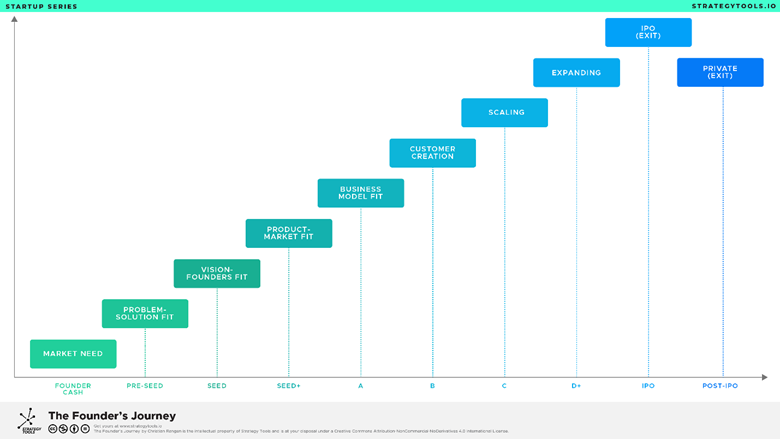
The Founder’s Journey (Rangen, 2023. Get it at www.strategytools.io)
As the friends were discussing, they also followed the news intently from NASDAQ, where fintech Chime’s IPO was a huge success, shooting up nearly 40% on IPO day. Malik, regretfully had never gotten into the equity pool, in fact, one of the reasons he left relatively early. For Malik, personally, employee equity ownership was now a hard-earned lesson, as well as a key success factor in his thinking shaping Leo Bank.
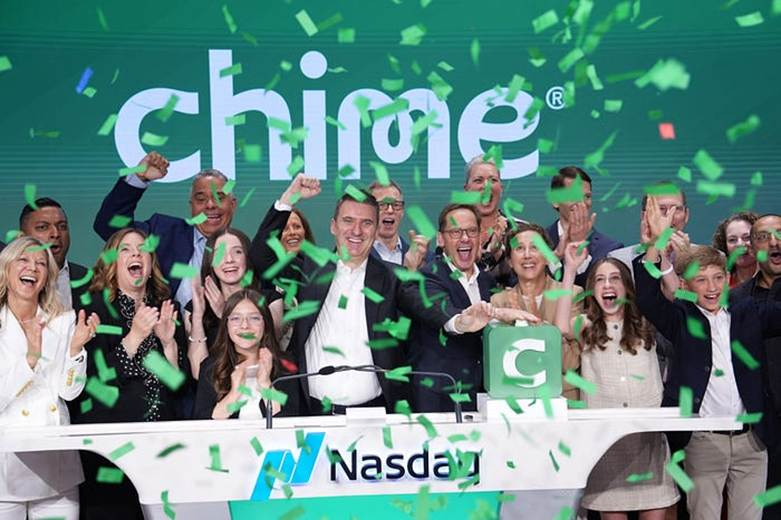
Chime IPO, a driving motivation for Malik in launching LEO Bank.
Over more coffee, the friends sketched out the early outline of what would become Leo Bank. “A digital bank for the future”, Maheen called it. “Aimed at tech savy, high-end users”, Liz had said, “with multiple revenue streams”, after all, she was the natural Chief Revenue Officer (CRO) in the group.
The friends sketched out the early strategy, and leaned in. “Let’s do it!” , “Let’s build and scale!”, and they were off to the races.
Leo Bank Company Card
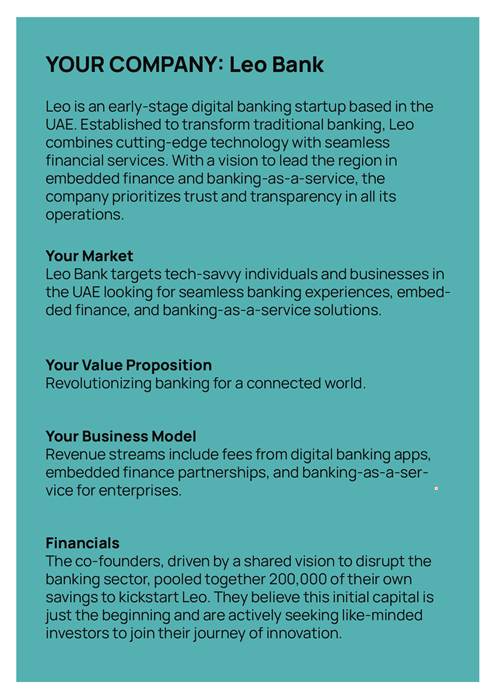
(In Scale Up MENA! participants select a case company card they would like to work on, with the task to scale the at case company from early idea to successful exit. Just like the four friends here)
Shaping Early Strategy
“I have identified nine strategic building blocks for us to win.” Maheed was the natural CEO of the group. With her consulting background and extensive venture experience from London, she could sketch out concepts and articulate early-stage, fast-moving, flexible startup strategies better than most. Her favorite class at LBS had been Luisa Alemany’s Entrepreneurship and Private Capital program, where Global Venture founder Noor Sweid had been the most inspiring guest speaker, sharing her journey to build Global Ventures.
The nine building blocks turned into nine strategic questions, questions Maheed would use as the team’s CEO to navigate the Founders’ Journey.
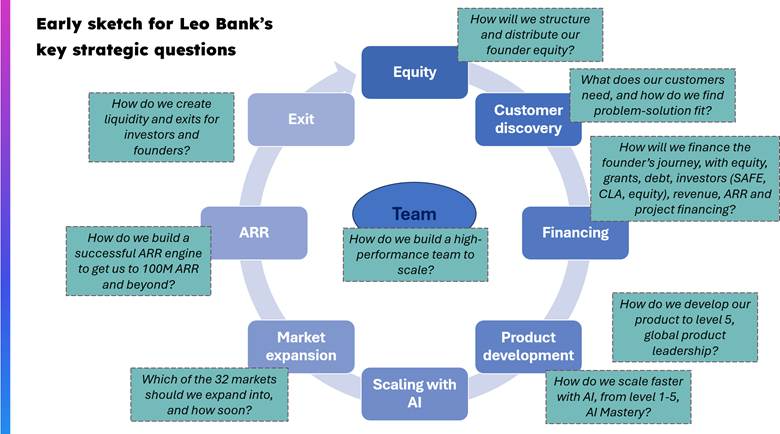
The nine building blocks to scale and win. Scale Up MENA!
Setting Up The Foundational Equity
“How will you structure and distribute our founder equity?”, the question asked by the Chairman of the Dubai Angel Network had struck a nerve. None of the team members had had a good answer. They poured over Carta’s Guide to Foundational Equity, and realized this was incredibly important as they laid the foundation for long-term success. 7-years founder vesting schedule , 18% ESOP sizing pool, advisor equity, first 10 hires equity, and first 250 hire equity structures were all discussed in detail. The experience of having been early employees at Careem ($3,1BN exit) and Chime ($18BN IPO market cap) had led all of them to understand the importance of getting the foundational equity right and using equity wisely to manage the growth ahead of them.
The Cap Table
The team landed on an opening cap table, with four equal co-founders, and all terms secured in the Founding Shareholder Agreement. Each founder put in $125.000 of personal savings (and two credit cards) to get Leo Bank launched. At $5 per share and 100.000 shares, they took their first step on the long cap table journey.
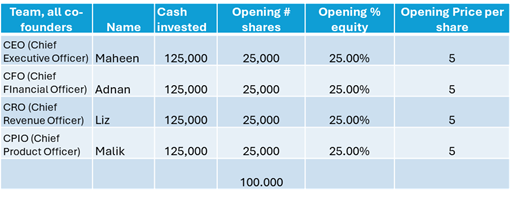
Initial cap table with four founders
Setting The Roles, Setting Expectations
“How do we build a high-performance team to scale?”, in the early days, the team carved out ample time to align on culture, leadership, roles and mutual expectations. They were clear on creating a high-performance culture, yet balance this with the lifestyle they wanted. Recognizing the 8-10 year journey, the marathon, ahead of them, they rejected the 9-9-7 schedule some of their Silicon Valley friends lived by. “We have to be smarter than that”, Liz had said over and over.
Customer Discovery
Identifying the problem-solution fit was a clear mission critical activity for the team early-on.
The team and the first two hires spent north of 50 hours per week, doing 350 customer interviews and 120 customer observations. Their goal: to clearly understand the gaps and weaknesses of today’s banking solutions, and iterate on early ideas for solutions. What was clear from the interviews and observations was clearly that today’s solutions were not sufficient for the banking of tomorrow. Ease of use, trust, convenience, UX, AI, simplicity and speed were all words that came out of the customer discovery process.
Based on the insights, the team developed 4 early ICP or Ideal Customer Profiles, for their beachhead target audience.
Charting A Long-Term Capital Strategy
“How will we finance the founder’s journey, with equity, grants, debt, investors (SAFE, CLA, equity), revenue, ARR and project financing?”. This was the question that Adnan and Maheen constantly focused on. Scaling will require $500M – $1BN to exit. We need to be long-term smart and craft a 8-10 year capital strategy.
The team was clear. We are not building ‘yet another fintech’. We are going to pour everything we got here to build, lead scale and exit, one of the leading fintechs of their generation. A once-in-a-lifetime-shot.
Adnan And Liz Were Both Clear: We Need To Outperform Careem. From Zero To $3,1BN Exit In Just Seven Years, That Was The Floor, Not The Ceiling Of Their Aspirations. Maheen, Of Course, Had Her Eyes Set On Leading A Listing, Possibly In Saudi Or London.
Regardless, they knew they needed a long-term plan for capital at scale. Using his bag of tools, Adnan had presented the team with his plan for the Funding Roadmap, broken down by source of capital, quarter-by-quarter over the next three years. Using the Long-Term Founding Roadmap, he had then mapped out a high-level plan for the next 6-7 funding rounds. They team left that working session amazed by his strategic perspective on financing.
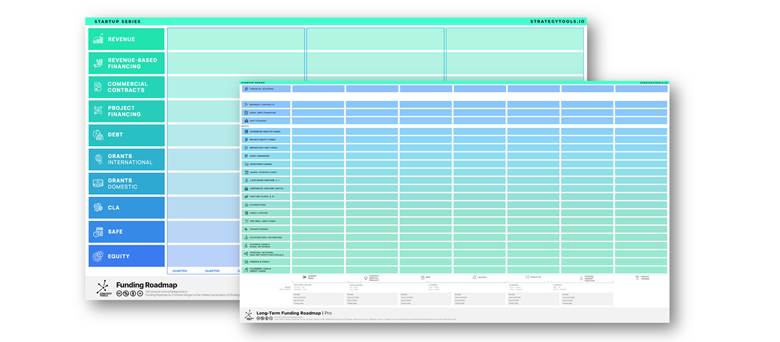
The Funding Roadmap and Long-Term Funding Roadmap, two key tools for any CFO
Developing The Product Roadmap
“How do we develop our product to level 5, global product leadership?”, Maheen had asked the team one day during the customer discovery process. Malik, with his CTO/CPO background was able to quickly sketch out his views on how to scale from early prototype (level 1) to global product leadership (level 5).
Scaling With AI
“How do we scale faster with AI, from level 1-5, AI Mastery?”, more novel and more challenging for the team was the question Liz brought to the table one day over working lunch at Alaya Dubai.
Liz had just come out of a morning event hosted by AWS and DFDF on using GenAI to scale GTM and sales organizations. “Tunc said we should seize the opportunity and make all MENA startups AI-first”, she said. The AWS ecosystem advisor had been an early champion for AI in the and was now showing multiple incredible success stories on how UAE-based startups had vastly increased their revenue velocity by using AI tools. “We have to build AI tools into our core DNA”, Liz shared with the team.
Raising The Pre-Seed
Based on the aggressive financing plan, the team knew they needed to move fast and secure financing before they ever actually started running low on cash. Adnan quickly built out the decks, financial model, budget, data room, strategy, and legal documents Leo Bank would need to move quickly on the fundraising. He chose SAFE as the instrument for the first two rounds.
(What Is A SAFE? SAFE Stands For Standard Agreement For Future Equity And Has Emerged As The Most Common Early-Stage Investment Instrument. Read More)
The team reached out to family members, and Liz’s younger brother jumped on a $200.000 SAFE, with a 3M cap. He requested to see the product roadmap, which was already in the dataroom. (Note, when doing a SAFE note, there are no changes to the company’s cap table. That only happens at the time of conversion)
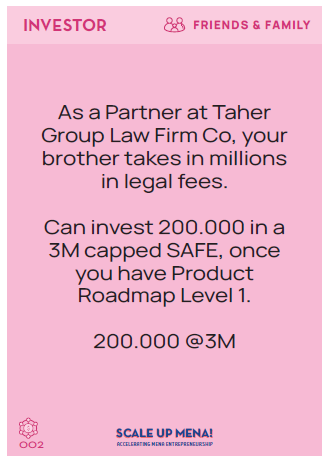
First investor in, the younger brother 200.000 SAFE Note
Early Product Launch
“How is our early beach head users loving our product?”, Malik and his small team of engineers had spent 20+ hours a day to get the first iteration of the product ready to launch. Early users loved it, and the word was out, that Leo Bank was worth trying out.
Closing The Seed
Six weeks later, the team closed their second round. The seed round was yet another SAFE note, this time led by Dubai Angel Investor Network for a 500.000 SAFE at a 3M cap. Liz’s older brother also joined in. Together with a handful of friends he brought another 500.000 on the same SAFE terms. with a total of 1,2M secured in early-financing the team, Adnan’s focus now shifted to ‘who should lead our seed+, knowing that their revenue was not ready to go for a Series A just yet.
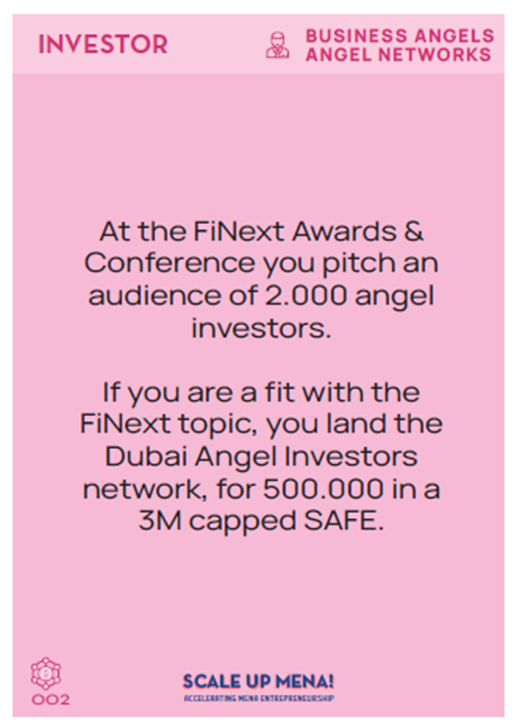
Seed investors, 500.000 SAFE note
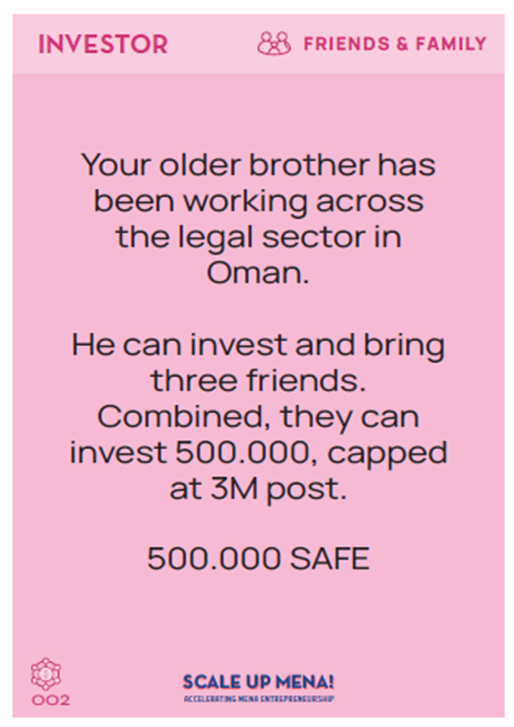
Seed investors, 500.000 SAFE note
Setting Up The ESOP
“When do we set up the ESOP?”. It was Maheen that had brought it up first. It had been a key part of the foundational equity discussion, but never got executed. Recalling the earlier conversation, Maheen and Adnan decided to move forward with a rather large allocation to the Employee Stock Option Program at 18%.
But understanding how to use equity to attract top notch talent, secure advisors and build a strong culture of ownership for the first 250 employees and beyond, the ESOP was not just a program, it was a strategic weapon to use to outcompete the vast majority of fintech startups in the region. The team decided to always show the ESOP on the cap table, but labelling it unallocated, fully diluted for new investors and new staff to best understand it. Of course, the actual allocation would be coming later, most likely through a company-wide SPV, to simplify and streamline cap table management as the company grew.
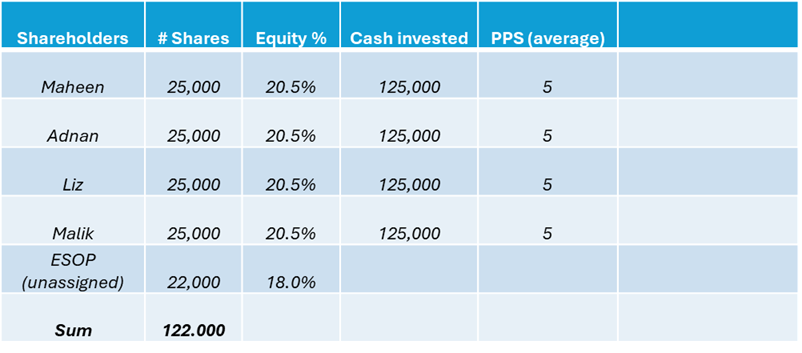
Cap table, with ESOP, showing fully diluted cap table pre-conversion
Securing Early Strategic Advisors
“GTM, market expansion, VC connections or AI? What are the right types of advisors we should bring on board?” The question had been hotly debated after one of the DIFC meetups, where the team met a vast number of possible, future advisors.
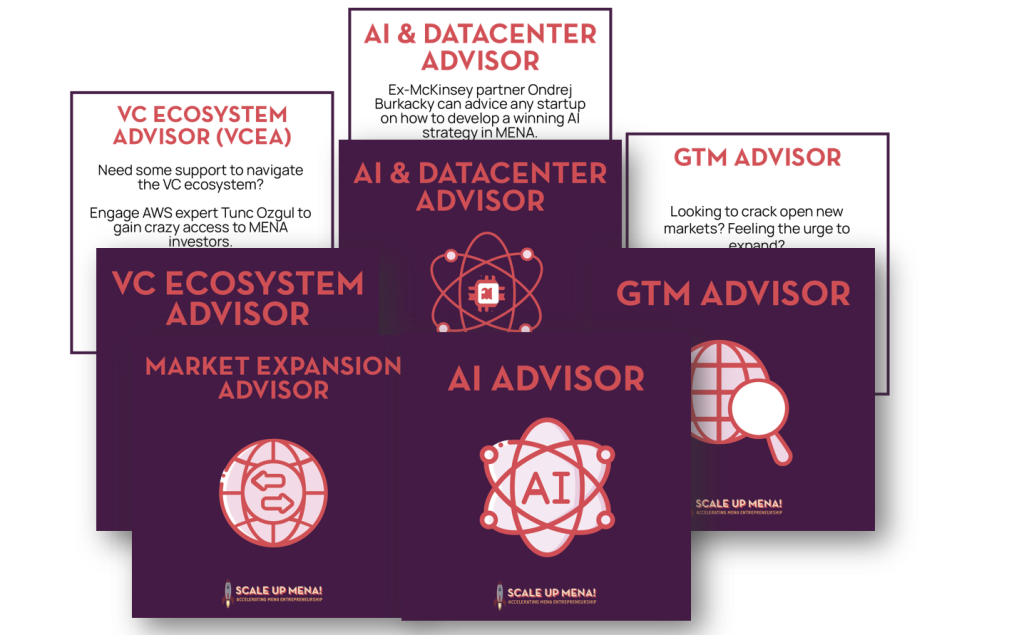
Meeting and selecting your strategic advisors, who would be the right advisors for Leo’s founding team?
Locking In The Seed+
it took 24 meetings, but the one meeting that mattered was running into Omer from Shorooq Partners. He asked to take the full round at 5M pre-money, for a 9,1% post. The team was also ready to open their network, to bring in three possible candidates to lead the Series A, already being shaped up for early next year.
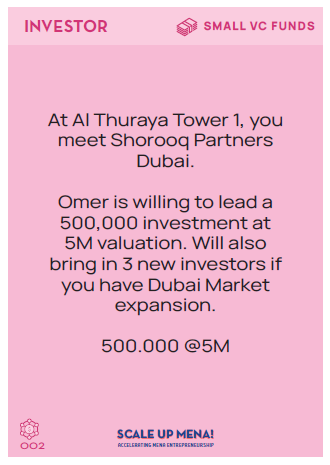
Shorooq took the entire Seed+, at a 5M pre-money valuation
Running The Cap Table
So, with 2 rounds of SAFE notes, and now the equity round, it was time for Adnan and Maheen to update the cap table.
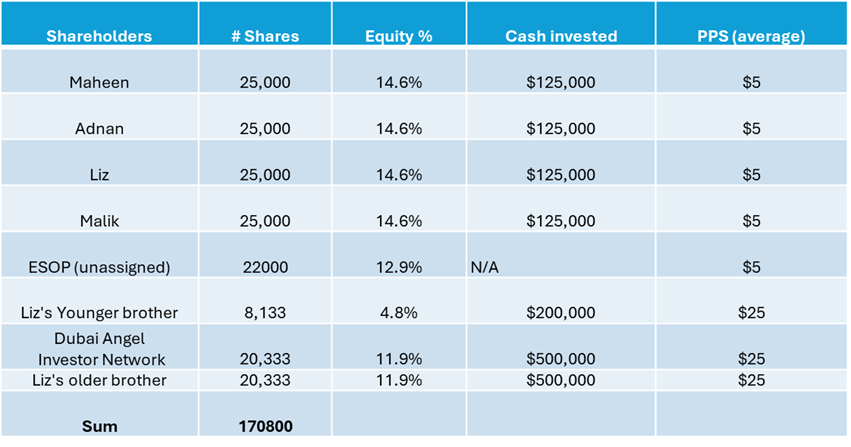
Cap table, with converted SAFE notes, pre-equity round.
With the ongoing seed+ with Shorooq, Leo Bank needs to first convert the pre-seed and seed SAFE notes. With a 3M cap, these investors are able to come in at a very attractive valuation, coming in at $25 per share.
Next, Omer and Shorooq Partners come in at a 5M post-money, equating $29 per share.
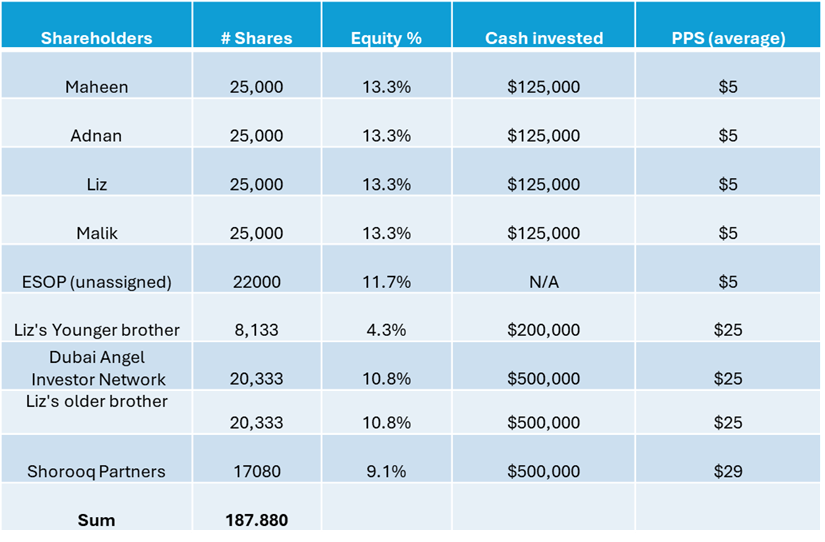
Cap table, post Seed+, getting ready for Series A
Looking at the cap table, the team realized, the early days of the company had cost them dearly in equity ownership. From 100% to now, a total of 53,2% ownership (fully diluted), the team had chosen to share ownership, both with early investors, angels and with a long-term, well crafted plan towards 250 staff.
Looking ahead, the questions were now,
– How to scale revenue?
– How to expand across the region?
– How to secure a strong Series A and Series B, with a value uplift that would not be to hard on the cap table.
Main question, was the team ready to scale?
Next…..
Part II: Scaling Up (Series A,B)
Closing the series A has been tough. “This is by far the hardest thing I have ever done”, Adnan was bone tired. Leading the process, investor meetings, DD and final negotiations had been hard. But, the round had been a huge success, a new strategic investor was onboard, and the focus was now 100% on hitting the key revenue milestones. $10M revenue, $50M revenue and $100M revenue. How long would that take? …. (Read Part II).
Part III: Growth Stage (Series C,D To Exit)
“What does your outcome canvas look like?” the question from the investment team at Oman Future fund had taken the founders aback. Outcome? Canvas? In exploring a lead candidate for the Series C, it was clear that the conversations, the expectations and the strategic thinking was going to be a big step up from the conversations they had back at Series A. “Are you aiming to list in Riyadh, London or the US?” …. (Read Part III).
Scale Up Mena!
Scale Up MENA! From Idea to Exit is one of the world’s leading methods to accelerate a startup’s successful growth journey. The Scale Up MENA! Masterclass is designed to help founders understand how to lead through the founder’s journey, from idea to ultimate exit.
Handle early-strategy, product development, AI, SAFE notes, local accelerators, venture financing, market expansion, ARR growth, growth financing, market leadership and exit transaction – all based on real content from across the MENA region.
Launching August 2025. Learn more.