
Startup founder. Looking to raise your first round of capital? Check out our field notes from a week in Dubai.
By: Chris Rangen, global advisor to VCs, FoF’s & ecosystem builders. Faculty, advisor, investor Sanjana Raheja, advisor to early-stage founders, accelerators, and innovation programs. Big thanks to Nitin Reen, Nuwa Capital for valuable input to this article.
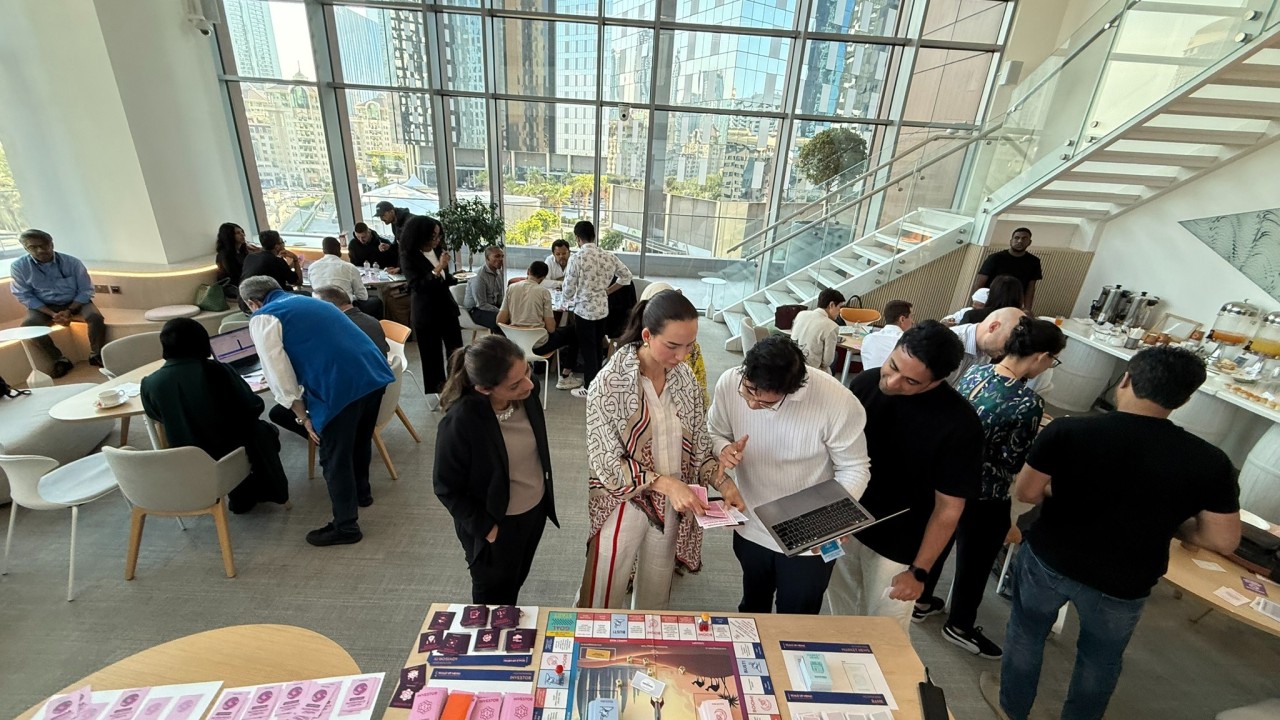
We just completed a packed week of Masterclasses on scaling strategy and investor readiness in Dubai. For parts of the week, we worked with first-time founders at the very earliest of stages. Their #1 question: how to raise the first round of investor capital. So, here’s the long answer to the question; how to raise money as a MENA founder.
(note, this article cover idea- and pre-stage. For seed-stage and beyond, see Fundraising in MENA 201 – your funding journey – coming soon).
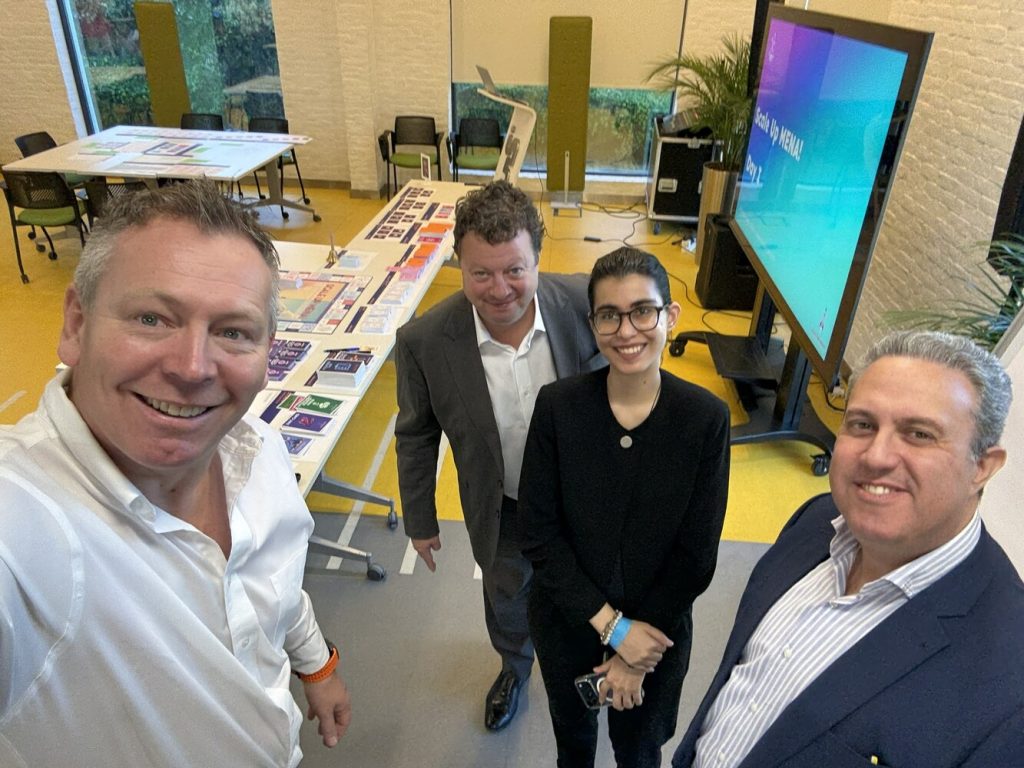
15 years of helping founders on startup fundraising
Over the past 15 years, we have worked with 1000’s and 1000’s of founders, mostly on growth strategy, fundraising and investor readiness. We have studied 100’s of highly successful founders and developed 1000’s of hours of slides, tools, simulations, digital courses, online workshops and in-person investor readiness programs delivered globally. Across different programs, roles, accelerators and 1:1 support, we have been on the inside of over 400 equity rounds, helping founders raise $100M’s from pre-seed to post-IPO.
Before you start
Before ever going out to raise any investor capital. Here are five questions you want to ask yourself.
Five questions before we start:
1. Do you really want to raise capital from investors – or are there other ways to grow and fund your business?
2. Are you a ‘backable case’? (ideally, venture backable case, with the possibility for 100X return – or higher?)
3. Do you fully understand the expectations, business model and timeline of your investors?
4. Can you generate investor liquidity and exit back to your investors on a reasonable timeline?
5. Do you have the early traction and commercial proof-points to be fundable?
If you are not sure what each of these questions mean or not sure about how to answer them, you might want to discuss your startup growth plans with a mentor or co-founder before proceeding.
Assuming you’ve read, reflected and answered these five questions well, let’s go ahead.
What you need to raise capital for a pre-seed stage company in MENA
Ok, you don’t really need these seven items listed below. Fact is, some founders can raise the first check simply by a call or a WhatsApp. No slides. No memo. Just trust and relationship. But for most, these are the seven items that should be in place.
1. Pitch deck
2. Investor FAQ
3. Financial model (if you have it)
4. Liquidity budget (if you don’t have it, develop it)
5. Long-term capital strategy (ok, most founder’s don’t it. They should)
6. SAFE note
7. Investor list (target 100 qualified, local investors, ideally from your personal network, local investors and local angels)
1. Pitch deck
There are tons of great examples and template for what to put in a pitch deck. We recommend these slides in your standard, short pitch deck. As you grow the company, you’ll hear us talking about your six decks. (read more about the six decks here) .
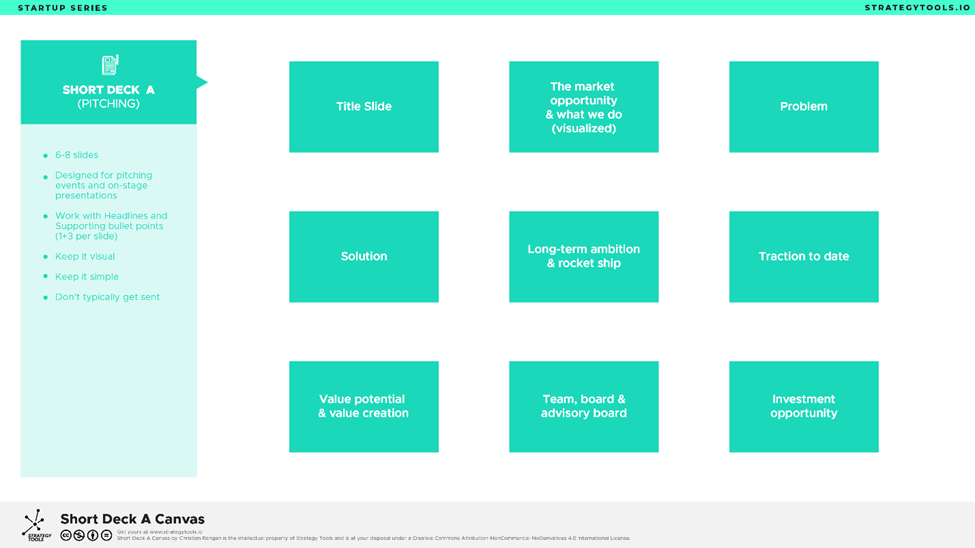
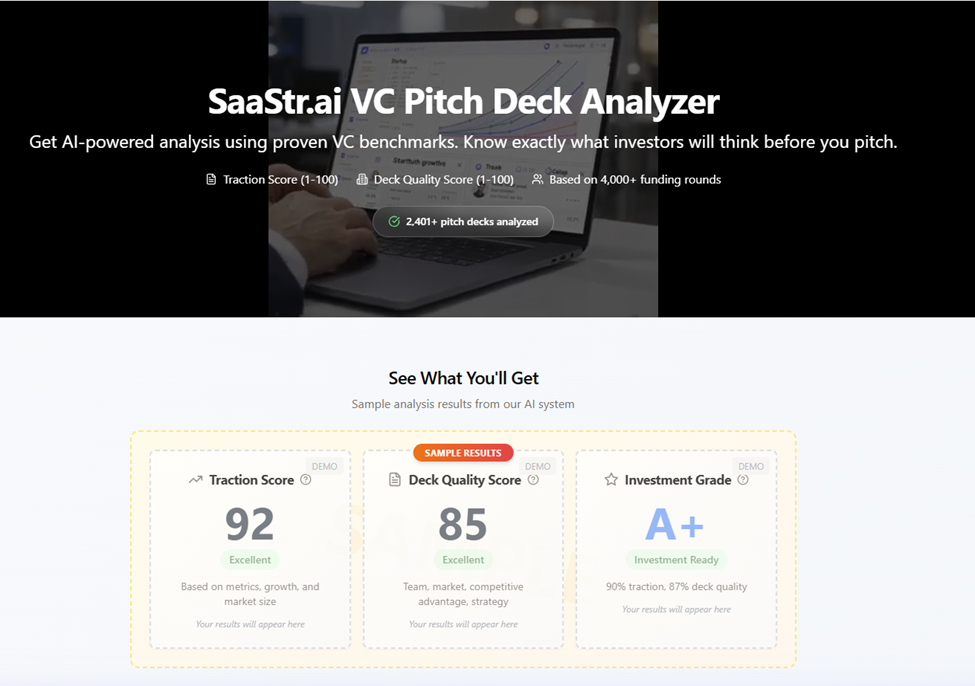
If you have already developed your deck and just want some quick feedback on it, test out the SasStr AI pitch deck analyzer, a superb tool to sharpen any pitch deck.
2. Investor FAQ
With the deck completed, you now want to dig more into the details. Developing a document with Investor FAQ, and making this available next to your deck is a great value-add for potential investors.
Think of the questions that Investors might have in their mind when you pitch to them. This includes:
a. Is there a clear, urgent, and large enough problem here?
b. Is this business model capable of producing venture-scale returns?
c. Are your milestones set, investable and can they take you to the next stage?
d. Is the risk/reward trade-off attractive enough to bet on today?
e. Do you have the background & experience, and can your team actually pull this off?
For more, Download Strategy Tools’ Investor FAQ for pre-seed companies here.
3. Financial model (if you have it)
At some point, you will need a financial model. For some, it might be too early, especially if you’re still validating your idea.
But if you have one (or can whip up a simple version), use it. It shows investors you’ve thought about the numbers behind your story.
We recommend keeping it simple at this stage. No need for complex spreadsheets yet.
Here is a pro tip: This works very well because investors love seeing you’ve stress-tested for surprises (e.g., “What if sales take 2x longer?”). You do not have to be precise; it’s about incorporating realism in your model.
4. Liquidity budget
This is the “bridge” to your financial model. If you don’t have it, develop it.
What you do need, is a basic liquidity budget. This show clearly show how the money coming in now will be spent (use of proceeds), what other financing sources you are using, any revenue you might have and how long your financial runway will be.
You can easily build it in 15 mins. Here’s how:
– Calculate your Inflows: Raise amount + grants (e.g., Dubai Future Accelerators) + early revenue.
– Your outflows: Monthly burn (e.g., $10K: 50% dev, 30% go-to-market, 20% ops).
– Runway: Formula = (Total inflows – Burn) / Monthly burn. Target 12+ months. An investor putting in $50.000 today; how long will that money last?
5. Long-term capital strategy (ok, most founder’s don’t it. They should)
Having a capital strategy “future-proofs” your fundraising to avoid dilution traps. This is the biggest point of pain for MENA founders that we saw in our masterclasses.
Build out a basic plan covering: – How much capital do you actually need, usually over a 5-10 year period – How are you going to finance this? (choice of instruments) – Over which timeframe will you be raising financing? – Which amounts, valuations and dilutions are you targeting for each round (ok, this last one is tricky, but the best founders got this mapped out already. You should too)
It sounds complicated, but it is the key to strategically fundraising your startup to success in the long term
In summary to the Financial Model, Liquidity budget, and long term capital strategy, focus on the 3 basics in Google Sheets or Excel:
a. Runway: How long will the money last? (Cash on hand ÷ Monthly burn = Months of runway.) Aim for 12-18 months post-raise.
b. Use of Proceeds: Break down spends (e.g., 40% product, 30% marketing, 20% team, 10% ops). Tie it to milestones like “Launch MVP in 6 months.”
c. Quick Projections: Rough revenue forecast (e.g., $0 now → $50K in Year 1 via 100 customers at $500/month) and costs. Test one key assumption, like customer acquisition cost.
One MENA-specific tweak: Please factor in local realities like currency fluctuations (e.g., AED/USD stability) or regional hiring costs. Start with a 6-month view to match fast pre-seed timelines.
I help work on this with early stage founders; reach out if you need support here!
Let’s move into the common (but heavily misunderstood) fundraising instruments that help you as a founder:
6. SAFE note
Most founders use a SAFE note at this stage. You can also use a CN (convertible note), a KISS (Keep It Simple Security) or equity, but Carta data is clear. SAFE notes are used by 90% of all founders at this stage. Use a standard Y-combinator SAFE note template, and input your key information. Get the SAFE template here.
Just be aware, not all countries recognize the SAFE as legal investment instrument, so there is always that….
Test out Carta’s SAFE note calculator, to model out your note terms.
Want to know about how these instruments work? Check out our Scaling Up in MENA: The Most Common Investment Instruments.
7. Investor list
Target 100 qualified, local investors, ideally from your personal network, local investors and local angels).
“Do you have any investors you can introduce me to?”, is probably the most common question I get from early-stage founders. Come on, that’s lazy.
Do your job, do your research and build your own lists. Map out your target investor personas. Study how active your investor prospects are. Find the ecosystem leaders that other angel investors follow. Map, study, map, study.
Building an investor list is surprisingly easy. Today, I expect any seed stage founder to be able to build out and maintain an investor CRM with 1.000 investor prospects, in some cases going to 5.000+ investor names. Difficult? Not at all. Takes some time? Yes, absolutely. But thanks to a plethora of options, from investor communities, online databases, matching tools and incredible AI tools, any founder can build a 1.000 name investor list in just minutes.
For pre-seed founders, start by engaging with personal network, high-net worth individuals and angel investors. Maybe explore local accelerators and grants, but keep it small, simple and fast. But, you do need to build that 100 name list.
What you will raise
The amount you raise will vary significantly based on many factors, including market, team, traction, general sentiment (AI is way up), etc, so take the numbers here and adjust for your own market and team.
You are likely to be raising in the range of $500.000 – $1M on a capped SAFE with discount. The amount and cap varies from market to market, sector to sector and generally based on the founders and their pricing power and negotiation position. Strong teams might see $500.000 5M capped SAFE with 20% discount. Less strong teams might see $100.000, capped at $1M post, with 30% discount and preference shares.
Less strong teams in smaller markets, might go as low as $50.000 – 100.000, but this is increasingly rare. if you are maturing into a VC round, you might even see $1M – $2M, at 4M – 8M post cap, a strong pre-seed deal in most markets.
Not sure what this all means? Do you research or get a mentor to guide you.
Understanding the instruments you will face
Pre-idea: $50.000 – 500.000, SAFE, capped at $500.000 – $4M post
Pre-seed: $100.000 – $2M, SAFE, capped at $500.000 – $8M post, with some markets at an average $12,5M post cap these days.
Seed: $300.000 – $5M, SAFE, capped at $1M – $15M post. Might also be a priced equity round. In some cases, could also be a CLA – convertible loan note
Seed+; $200.000 – $5M, SAFE, capped at $2M – $15M post. Might be a very strong seed round, with high level of interest. Could also be a bridge round, or even a short-term emergency financing round.
A: $5M – $25M, target $15M round size. Valuation $30M to $80M pre-money valuation
Across these rounds, you an reasonably expect a 20-25% dilution in the early stages, declining towards 15% – 25% as the company grows. If you have strong negotiation power, like Gamma, you can raise a $100M series B at 3% dilution, but this is the rare exception for the top 2% founders.
(Want to learn more about the six investment instruments you have and how to best use them? Join our 2026 Scale Up MENA! Masterclasses and Investor Readiness Programmes)
Going from notes to priced equity rounds
In many markets, the SAFE note has become the standard go-to-investment instrument. It’s well suited for that job. But, after a few rounds, you are likely going to switch from notes to a full equity round.
This is what we call a priced round, as the investors will – for the first time – set a price on your company. In doing so, SAFE notes are supposed to convert into equity. Some CN (Convertible loan notes) might get paid back or converted as well.
Around this time, we would also normally see a ESOP (Employee Stock Option Program) get established and a formal board of directors get set up. In our experience, we would ideally like to see the ESOP get set up far earlier, and be used as a key tool for attracting and keeping top talent from day one. However, many founders will only establish the ESOP here, leading into the first priced round.
Same on the board, we strongly encourage setting up boards already in year one, to start building the right board for long-term strategic support.
Read more about the seven startup boards.
Beware of stacking SAFEs
“Everyone said SAFE notes were supposed to be easy”, said one founder we worked with in Cairo. She had done four SAFE notes, across four different rounds. All early-stage.
If you know what you are doing, stacking SAFE notes is perfectly fine. Challenge is, most founders do not.
In her case, she held four different SAFE notes, with a total of 13 different investors, each note with different terms, caps, discounts. One of the notes did not specify pre- or post-money valuation. Another did not specify preference shares or common shares. One had MFN (most-favored nation). The others not. But, most of all, none of them clearly explained how to structure the SAFE notes going into conversion.
Our founder, she was equally confused and perplexed. Suddenly, she found, these easy-to-use SAFE notes were not so easy after all.
When stacking multiple SAFE notes on top of each other, just make sure you either really know what you are doing or you have a great lawyer-advisor at hand to guide you when the conversion day comes.
Understanding how dilution compounds
Ok, so you have now converted 1-4 rounds of SAFE notes, set up a 20% ESOP program and completed your first priced round. Congrats. Few founders actually make it this far. Just be aware of the equity math. Because, at this stage, you have likely sold off, or promised (ESOP) 40% – 60% of your company’s equity. More than one founder has turned ashen-white when realizing that the ‘easy SAFEs’, ‘small ESOP’ and ‘great funding round’, suddenly add up to a total of 55% of the company now switching hands.
Smart founders would abide by Nuwa Capital’s Nitin Reen’s advice, “stop at 3 concurrent notes”.
If you want to read more about the compounding dilution through the founder’s journey, check out our story on Leo Bank.
How to improve your negotiation position
– Be profitable, don’t need the money
– Show strong commercial traction, with a path to profitability
– Have a great business in place
– Have a great team in place
– Have great advisors and early investors in place
– Run a great fundraising process
How to run an accelerated fundraising process
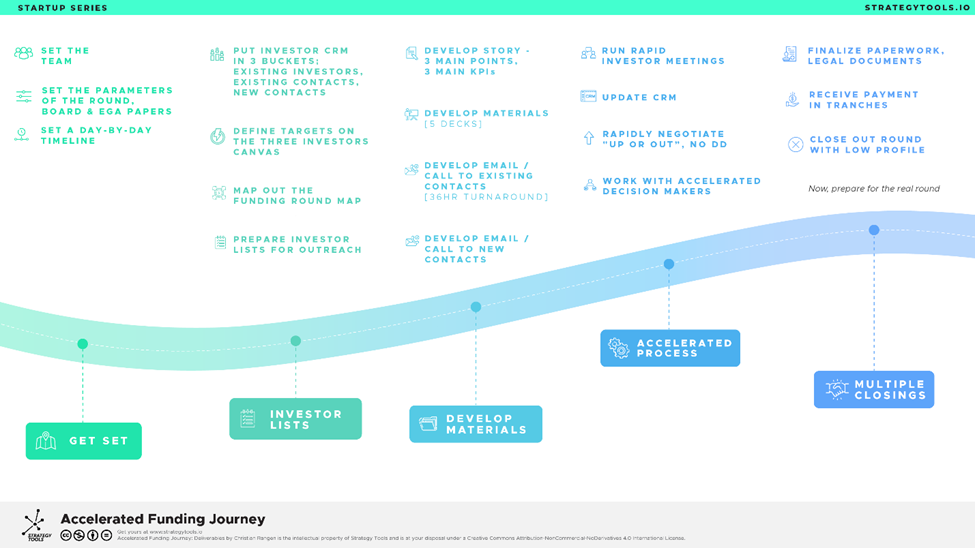
Most pre-seed founders should be able to run a fast, accelerated fundraising process. We call this the accelerated fundraising journey. The point here is that this process is designed for speed, for getting the money in fast and quickly getting back to building the business.
Few founders design the process for speed, often ending getting dragged into lengthy processes, even years of fundraising, for even a small amount. Pro tip: optimize your pre-seed round for speed, fast closing and getting back to building.
Advanced early-stage founder?
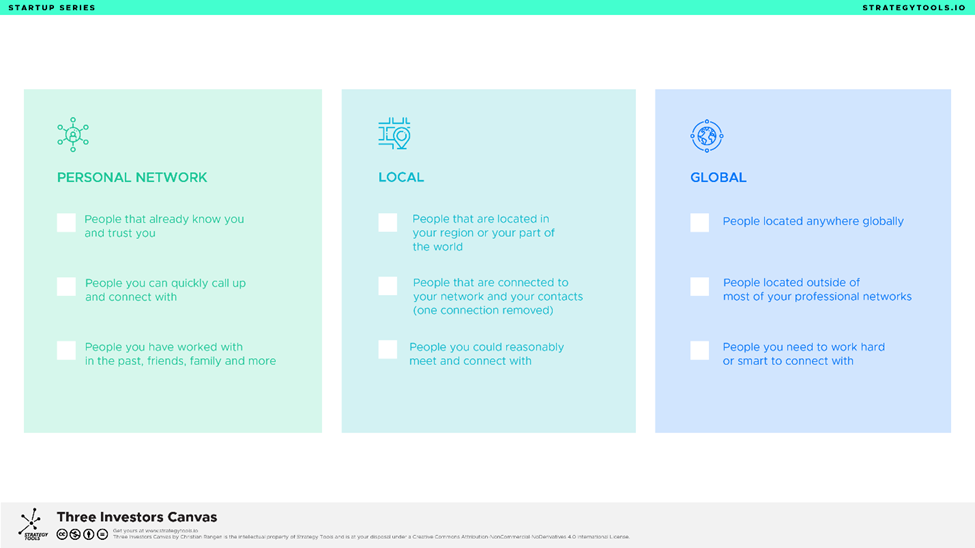
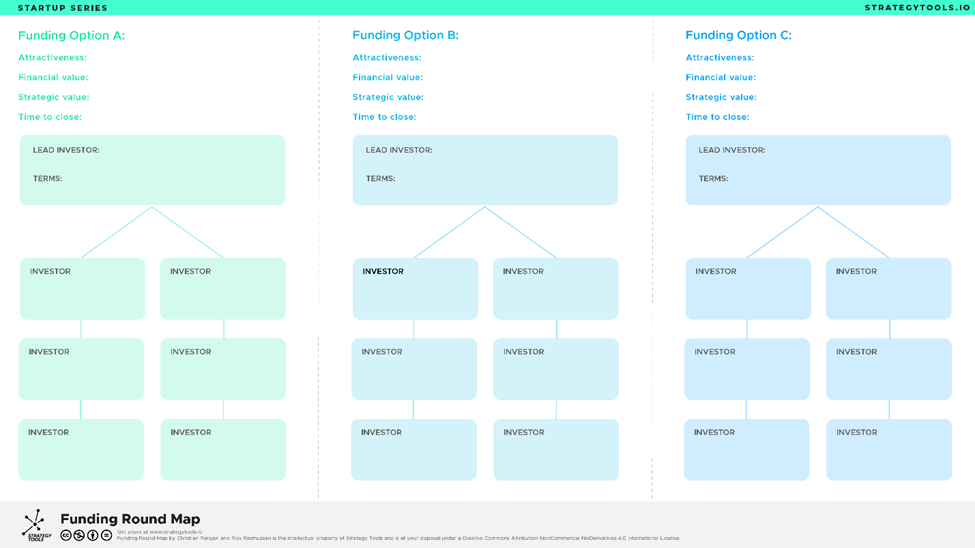
If you are an advanced, early-stage founder, use these two canvases to guide your work.
The most common mistakes we see
1. Not being ready
2. Not having an investment instrument (SAFE note ready)
3. Asking for too much money vs. company maturity and pricing power
1. Not being ready
Surprisingly, many founders go to market to raise capital – without having their most basic materials in order. Pitch deck lacking key information. No budget in place. No process in place and no timeline to close. The result? Long slogh, little progress. Time and energy wasted. Limited chance to close.
2. Not having an investment instrument (SAFE note ready)
We were running an investor readiness program in Cairo. Every founder, without exception, were pitching a great story, but their presentations ended abruptly. The “how to invest slide” was missing. There were no SAFEs ready. No timelines. No co-leads waiting in the wings. No other investor commitment and no momentum to close. Investors watching were all wondering the same, “How do I invest?”, unfortunately, so did the founders. Once we added that last slide:
HOW TO INVEST Raising $100.000 on a $1,5M post SAFE. $50.000 already secured from five angels and one accelerator. Round closing in 3 weeks. Access our investor pack here and sign the SAFE note here. Things started speeding up. Ask yourself. Have you built an investor pack that anyone can sign on today?
3.Asking for too much money vs. company maturity and pricing power
“We are raising $2,2M on a SAFE”, said one founder I met in Dubai this week. “But you don’t have any revenue or metrics to support that”, I replied. “That’s why we need the money”, came the response. Not an ideal response.
This might surprise some founders, but you really do want to show genuine momentum, traction and preferably early revenue, even at pre-seed stage. If you need $2,2M to get to first revenue, well, unlikely to happen. In that, raise a smaller amount, maybe $200.000 instead of $2,2M and build more capital efficiently.
Founders, go to work
Ok, that should be a pretty rich list for most founders. Our goal. help you raise smarter, faster and get back to scaling.
Good luck!
Want to read more?
The Story Of Scaling Leo Bank From Idea To Exit In The Middle East.
Founder: the six decks you need
Launching the First-time Fundraising Series
1. Deciding to raise
2. Running a competitive process
3. Building a compelling deck
Can you run MedAssist’s Cap Table?
Antler: How to raise a pre-seed round
Carta: pre-seed funding
Y-combinator: a guide to seed fundraising
SAFE note templates (from Y combinator)
Ten Books That Will Save You From Costly Cap Table Mistakes: A Reading List for Founders, advisors & expert facilitators
This article is part of the Startup Series at Strategy Tools, helping founders, investors, and ecosystem builders across MENA navigate the journey from startup to scale-up. Read more about Scale Up MENA here. Thanks to Scott Newton and Rick Rasmussen for the collaboration in shaping a lot of this materials. Get the tools and learn more at www.strategytools.io